Friday, August 10, 2012
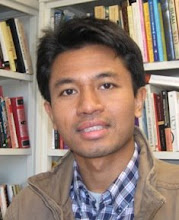
Updated Biodata of Dr. Muhamad Ali
Curriculum Vita
Muhamad Ali
EDUCATION
2002 - 2007 Ph.D., History, Islam, Southeast Asia
University of Hawaii at Manoa, Hawaii, USA.
2000 - 2001 M.Sc. in Islam and Politics, Islamic and Middle Eastern Studies
Edinburgh University, Scotland, Great Britain.
1992 - 1998 B.A., Islamic Studies
The State Institute for Islamic Studies, Jakarta.
MEMBERSHIPS, HONORS AND AWARDS
08/2008 - Present Member. Association of Muslim Social Scientists of North America (AMSS).
01/2008 - Present Member. Association of Asian Studies.
07/2007 - Present Member. American Academy of Religion.
07/2007 - Present Member. East-West Center Alumni Association.
10/2006 - 10/2008 Member. Phi Alpha Theta History Honor Society.
2008 Regents' Junior Faculty Fellowship.
2007 Graduate Fellowship.
2005 Distinguished Service.
2004 Taraknath Das Prize.
2004 Moscotti Award.
2003 Walter Vella Prize.
2003 Distinguished Service.
2003 Taraknath Das Prize.
2003 Walter Vella Prize.
2001 Scholarly Society.
1992 Scholarship.
PROFESSIONAL ACTIVITY AND SERVICE
Editorial Boards
03/2010 - 02/2011 Editor. American Journal of Islamic Social Sciences .
Professional Committee Service
04/2010 - 06/2010 Member. Steering Committee, Grant Proposal. UCR.
03/2010 - Present Member. Steering Committee American Overseas Research Center in Indonesia . Association of Asian Studies.
02/2010 - 12/2011 Member. American Research Overseas in Indonesia . Indonesian Studies Group at the Academiy of Asian Studies.
Professional Boards & Societies
04/2010 - 06/2010 Member. Steering Committee, Grant Proposal. UCR.
03/2010 - Present Member. Steering Committee American Overseas Research Center in Indonesia . Association of Asian Studies.
02/2010 - 12/2011 Member. American Research Overseas in Indonesia . Indonesian Studies Group at the Academiy of Asian Studies.
Presentations
07/2012 Presentation. Peacemaking and Interfaith Dialogue in Indonesia and the U.S. . Congress of Indonesian Diaspora . the Indonesian Embassy for the U.S. and International Association of Indonesian Scholars . Los Angeles. Presented on 07/2012.
05/2012 Lecture/Seminar. One and Many: Diversity of Religious Pluralism in Indonesia . Colloquium. Center for Southeast Asian Studies, UCLA . Los Angeles . Presented on 05/2012.
04/2012 Lecture/Seminar. Pembaharuan Pemikiran Islam di Indonesia: Analisis Kritis (An Islamic Reformist Thought in Indonesia: A Critical Analysis) . Colloquium. State Islamic University of Syarif Hidayatullah. Jakarta, Indonesia . Presented on 04/2012.
04/2012 Presentation. Islamic Studies and Post-Orientalism . Monthly Discussion Forum . the Liberal Islam Network and the UtanKayu Community. Jakarta, Indonesia . Presented on 04/2012.
03/2012 Presentation. Mosque Sermon as Politics . Annual Meeting. Association of Asian Studies . Toronto, Canada . Presented on 03/2012.
12/2011 Presentation. Whither Indonesian Islam? the Rise and Development of an Area Study, Challenges, and Opportunities . International Conference on Indonesian Islam as an Area and Discplinary Study . State Islamic Insitute of Sunan Ampel. Surabaya, Indonesia . Presented on 12/2011.
12/2011 Lecture/Seminar. Multiculturalism in Southeast Asia . Regional Conference on Islam and Multiculturalism in Southeast Asia . the Wahid Institute, Indonesia and LeftWrite Center, Singapore. Jakarta, Indonesia . Presented on 12/2011.
11/2011 Presentation. Penelitian Sosial dan Humaniora di Indonesia (Research in Social Sciences and Humanities in Indonesia: Challenges and Opportunities) . Research Day 2011 . Research Institute, State Islamic University of Syarif Hidayatullah. Jakarta, Indonesia. Presented on 11/2011.
11/2011 Presentation. Islamisme dan Post-Islamisme: Menelaah Pilihan-Pilihan Politik Islam Kontemporer di Indonesia (Islamism and Post-Islamism: Analyzing Contemporary Islamic Political Options) . Colloquium. Department of Philosophy, the University of Indonesia . Depok, Indonesia . Presented on 11/2011.
11/2011 Presentation. One and Many: Religious Pluralism in Indonesia . Annual Meeting . American Academy of Religion . San Francisco . Presented on 11/2011.
11/2011 Presentation. Verandahs of Mecca and Medina: Religion and Colonialism in South Sulawesi and Kelantan . Annual Meeting. American Academy of Religion. San Francisco. Presented on 11/2011.
11/2011 Presentation. Islam dan KeIndonesiaan: Merajut Kebhinekaan dalam Keikaan dalam rangka Pendidikan Karakter Bangsa (Islam and Indonesianness: Diversity, Unity, and National Character Building) . Interdisciplinary Colloqium . The State Islamic College . Salatiga, Indonesia . Presented on 11/2011.
10/2011 Lecture/Seminar. Peta Kehidupan Umat Islam di Indonesia: Penjelasan Umum, Studi-studi Kasus, dan Masukan Pemikiran (Mapping Islamic Communities in Indonesia: General Observation and Case Studies). The Annual Meeting of the Ministry of Religious Affairs, Republics of Indonesia . Ministry of Religious Affairs, Republics of Indonesia . Jakarta, Indonesia. Presented on 10/2011.
06/2011 Lecture/Seminar. Islam in Southeast Asia: Beliefs, Practices and Transmissions. the Summer Institute Focus on Asia. the East-West Center . Honolulu, Hawaii . Presented on 06/2011.
06/2011 Lecture/Seminar. So That Ye May Know One Another: Islam and Pluralism . Lecture Series . The Shangri La Doris Duke Foundation. Honolulu, Hawaii. Presented on 06/2011.
06/2011 Lecture/Seminar. Islam and Religious Pluralism in America. The Lecture Series on Islam in the World . The Library of the State Islamic University, Syarif Hidayatullah. Jakarta. Presented on 06/2011.
05/2011 Lecture/Seminar. Islam and Religious Pluralism in America . Lecture . At America and the U.S. Department of State . Jakarta, Indonesia. Presented on 05/2011.
05/2011 Lecture/Seminar. Islam, Judaism, and Anti-Semitism in Indonesia . The Seminar Series on Islam . The Center for the Study of Islam and Society, the State Islamic University, Syarif Hidayatullah. Jakarta. Presented on 05/2011.
03/2011 Presentation. Islam in Indonesian Politics. Panel on Islam in Indonesian Politics. Association of Asian Studies. Honolulu. Presented on 03/2011.
02/2011 Presentation. Islamism and Revolution in Egypt . The Events in Egypt and Their Significance: A Teach-In . CHASS, University of California Riverside. Riverside. Presented on 02/2011.
01/2011 Lecture/Seminar. Islam and Civil Society in Southeast Asia . Religion in Global Civil Society . he Orfalea Center for Global & International Studies, University of California Santa Barbara. Santa Barbara . Presented on 01/2011.
11/2010 Presentation. Indonesian Muslim Perception of Jews and Judaism . American Academy of Religion Annnual Conference . American Academy of Religion . Atlanta . Presented on 11/2010.
10/2010 Presentation. Islamic Law and the Vision of a Prosperous Society . Workshop Health as Metaphor and Reality . Wake Forest University and the Asian Studies Development Program (ASDP) . North Caronila . Presented on 10/2010.
09/2010 Presentation. Introduction to Islamic Studies and How to Teach the Course to Science Students . Workshop on Teaching Required Courses . the State Islamic University. Jakarta. Presented on 09/2010.
08/2010 Presentation. The Muslim Center Near Ground Zero: The History and Contemporary Debates of American Views of Islam . TalkShow. Radio 68H . Jakarta. Presented on 08/2010.
08/2010 Presentation. Islam in the West: Historical and Regional Studies Perspectives . The Indonesian Institute for Sciences . Jakarta. Presented on 08/2010.
06/2010 Lecture/Seminar. Islam and Contemporary Issues in Indonesia . Focus on Indonesia . East-West Center AsiaPacific Education Program for Schools. Honolulu, Jakarta. Presented on 06/2010.
05/2010 Presentation. Religious Debates in Contemporary Indonesia . Theta Alpha Kappa Annual Banquet . Theta Alpha Kappa National Honor Society for Religious Studies and Theology. UCR . Presented on 05/2010.
05/2010 Presentation. Islamic Law, the State, and Minorities in Indonesia and Beyond. UC World History Conference Encounters in the Mediterannean. Department of History, UCR . UCR . Presented on 05/2010.
04/2010 Lecture/Seminar. Progressive Islam in Indonesia and Malaysia. CERI (Centre d'Etudes et Recherches Internationales. Paris. Presented on 04/2010.
04/2010 Presentation. Israeli-Palestinian Conflict . Is Peace Possible in the Middle East. CHASS UCR . UCR . Presented on 04/2010.
04/2010 Presentation. Categorizing Muslims in Indonesia . Seminar. Institut d'Etudes de l'Islam et des Societes du Monde Musulman (IISMM). Paris. Presented on 04/2010.
03/2010 Lecture/Seminar. Religious Pluralism in Indonesia: A Theological and Political History. Seminar. Ecole des Hautes Etudes en Sciences Sociales (EHESS). Paris. Presented on 03/2010.
03/2010 Presentation. The Current State and Future of Southeast Asian Studies: A Religious Studies Perspective . A Roundtable Discussion on Southeast Asian Studies. Southeast Asia: Text, Ritual, and Performance (SEATRIP). UCR. Presented on 03/2010.
03/2010 Lecture/Seminar. Colonialism and Islamic Conservatism in Indonesia and Malaysia. Seminar. Ecole Francaise d'Extreme Orient (EFEO). Paris. Presented on 03/2010.
03/2010 Presentation. Conserving Islamic Curricula in Colonial Indonesia and Malaysia. The Annual Conference of Association of Asian Studies. Association of Asian Studies (AAS). Philadelphia. Presented on 03/2010.
03/2010 Presentation. Youth and Peace from an Islamic Perspective . Interfaith Dialogue: Compassion in Daily Practice. University of the West . Rosemead, CA . Presented on 03/2010.
11/2009 Presentation. Constructing and Contesting Progressive Islam: Islam Hadhari in Malaysia. The Annual Conference. American Academy of Religion . Montreal, Canada. Presented on 11/2009.
10/2009 Presentation. Politics of Difference in Indonesia Muslim Publics: Online Responses to the Recent Jakarta Blasts . Politics and New Media in the Muslim World. Cente for SOutheast Asian Studies, UC Berkeley. Berkeley CA . Presented on 10/2009.
07/2009 Presentation. Religion and Secularism. Panel on Religion and Secularism. Oxford University. Oxford. Presented on 07/2009.
06/2009 Presentation. Indonesian Muslims Perceiving Jews and Judaism . Workshop on Jews in Indonesia: Perceptions and Histories . Asia Research Insitute, National University of Singapore. Singapore. Presented on 06/2009.
06/2009 Presentation. Islamic Schools and Modern Science in Indonesia and Malaysia. Workshop on the Madrasah in the Modern World. Copenhagen University. Copenhagen, Denmark. Presented on 06/2009.
04/2009 Lecture/Seminar. What Went Right: Civil Islam in Contemporary Indonesia. Lecture. Soka University of America . Aliao Viejo, CA . Presented on 04/2009.
03/2009 Presentation. "The Enemy Within": The Ahmadiyya in Indonesia . Muslims in Asia Series . University of Hawaii at Manoa. Honolulu. Presented on 03/2009.
11/2008 Presentation. Obama's Election and Impact on the Muslim World . Faculty Panel on the US Presidential Elections. UCR . UCR . Presented on 11/2008.
10/2008 Presentation. Islam and Religious Pluralism in Indonesia and India: The Thought of Abdurrahman Wahid and Asghar Ali Engineer. Annual Conference . American Association of Islamic Social Sciences. Harvard University . Presented on 10/2008.
10/2008 Presentation. Liberal Islam Network in Cyberspace . Islam and Popular Culture in Indonesia and Malaysia. University of Pittsburgh . Pittsburgh. Presented on 10/2008.
05/2008 Presentation. Inclusive Religious Education. Symposium of Indonesian Education. Indonesian Consulate Generale at Los Angeles. Presented on 05/2008.
04/2008 Presentation. Teaching about Islam: Issues and Challenges. Workshop and Panel Discussion on Learning and Teaching about Islam. Joint Program by Religious Studies, Political Science, Office of the Dean of CHASS, Public Policy Initiative, and UCR Mellon Workshop. HMNSS 2212. Presented on 04/2008.
04/2008 Presentation. The Rise of Liberal Islam Network in Indonesia, 2001-2007. Ten Years After: Reformasi & New Social Movements in Indonesia, 1998-2008. UC Berkeley and UCLA . UC Berkeley. Presented on 04/2008.
03/2008 Presentation. The Diversity of Islamic Reform in Indonesia and Malaysia. American Academic of Religion Western Region. American Academy of Religion. Fuller Theological Seminary, Pasadena, California. Presented on 03/2008.
Consulting
06/2009 - 07/2010 Consultant. the East West Center, Honolulu, Hawaii.
Workshops
05/2011 - 05/2011 Participant. Workshop on Curriculum and Journal Article Writing. the State Islamic University. Jakarta. Workshop Date(s): 05/2011-05/2011
03/2008 - 03/2008 Participant. Teaching Gender and Islam. Whittier College. Whittier College, CA. Workshop Date(s): 03/2008-03/2008
03/2008 - 03/2008 Participant. Sexual Harrasment Training. UCR . online. Workshop Date(s): 03/2008-03/2008
10/2007 - 10/2007 Participant. Academic Integrity. UCR. HMNSS UCR. Workshop Date(s): 10/2007-10/2007
10/2007 - 10/2007 Participant. Success and Leadership Skills for Academe 2007-08. UCR. UCR . Workshop Date(s): 10/2007-10/2007
Meetings Attended
03/2011 Annual Conference of Association of Asian Studies . Association of Asian Studies . Honolulu.
11/2009 Annual Conference of American Academy of Religion. American Academy of Religion. Montreal Canada.
05/2008 Regular Meeting. Southeast Asia: Text, Ritual, and Performance. HMNSS UCR .
12/2007 UCR Transnational Seminar "Transnational Social Movements and Global Civil Society". Global Studies Program. HMNSS UCR.
11/2007 Annual Conference . American Academy of Religion. San Diego.
Education Materials/Outreach
10/2009 Introduction to Islamic Studies (Pengantar Studi Islam). Editing Chapters on Islam, Islamic History, and Islamic Theology. 50 Pages.
Other
03/2011 - 03/2011 Interviewee. The Student Journal, Majalah Institute, the State Islamic Univ., Jakarta. Interviewed about my professional career and current research on Muslim views of Judaism in Indonesia.
03/2010 - 03/2010 Interviewee. CNS News.com. Regarding Obama's visit to Indonesia in 2010.
07/2009 - 07/2009 Moderator. The Graduate School, the State Islamic University, Jakarta. Moderating a Session on the International Conference on Debating Progressive Islam.
08/2008 - 08/2008 Interviewee. Media Indonesia. Interviewed regarding my path to becoming an assistant professor in Islamic Studies in the U.S..
08/2008 - 08/2008 Interviewee. Press Enterprise. Interviewed on Indonesian independence celebration with Mass in the U.S. .
07/2008 - 07/2008 Interviewee. Press Enterprise. Interviewed regarding a website created by Muslims (seen as an alternative to YouTube) .
04/2008 - 08/2008 Interviewee. Afkar Journal / Cairo, Egypt. Interviewed regarding Egypt Islamic reformation in Indonesia.
10/2007 - 10/2007 Interviewee. Press Enterprise. that Henna art has no religious significance, although it is connected to religious festivities .
08/2007 - 08/2007 Interviewee. CNS News. on the critical view of the revival of Islamic caliphate among few Muslim movements today .
Manuscripts
03/2012 - 08/2012 South-East Asia Research. 1 Manuscripts Reviewed.
02/2012 - 05/2012 a doctoral thesis Center for the Study of Contemporary Muslim Societies, University of Western Sydney, Australia. 1 Manuscripts Reviewed.
01/2012 - 03/2012 Studia Islamika. 1 Manuscripts Reviewed.
07/2010 - 09/2010 American Journal of Islamic Social Sciences. 1 Manuscripts Reviewed.
03/2008 - 04/2008 Contemporary Southeast Asia. 1 Manuscripts Reviewed.
10/2006 - 11/2006 American Journal of Islamic Social Sciences. 1 Manuscripts Reviewed.
Grant Proposals
03/2012 - 04/2012 Royal Netherlands Academy of Arts and Sciences. 1 Grants Reviewed.
03/2010 - 05/2010 Center for Ideas and Society UCR. 27 Grants Reviewed.
03/2010 - 05/2010 CHASS Research Grant in Humanities. 16 Grants Reviewed.
Books
07/2010 Contemporary Developments of Indonesian Islam: Explaining the Conservative Turn. Center for Southeast Asian Studies, National University of Singapore. B Reviewed.
Chapters
10/2009 Introduction to Islamic Studies (Pengantar Studi Islam). Ushul Press . 3 Reviewed.
UNIVERSITY AND PUBLIC SERVICE
04/2012 - 05/2012 College. Chair. Public Lecture on Indonesia, Islam and Democracy in campus, hosted by Religious Studies Department, co-sponsored by Center for Ideas and Society, Political Science, Global Studies, Interdisciplinary Studies.
03/2012 - 07/2012 College. Research Advisor. Indonesian Islam in the U.S..
03/2012 - 03/2012 Campus. Moderator. American Exceptionalism: Destiny or Delusion? held by UCR Extension and the Osher Lifelong Learning Institute.
09/2009 - Present College. Member. Steering Committee of Global Studies Program.
09/2009 - 09/2011 College. Member. CHASS Executive Committee.
08/2008 - 08/2008 Department. Member. Gender and Religion Committee.
07/2008 - 09/2010 Department. Member. Undergraduate Affairs Committee.
06/2008 - 06/2008 College. Member. Language/South Asia Study Initiative.
03/2008 - 03/2008 College. Participant. Honoring the Recipients of the 2008 Regents' and Chancellor's Scholarships.
03/2008 - 06/2008 College. Member. Islamic and Middle Eastern Studies Initiative.
02/2008 - 04/2008 Campus. Organizer. Dr. Ashgar Ali Engineer's Visit at UCR.
01/2008 - 06/2008 Department. Co-organizer. Dr.Jenny White's Visit at UCR.
12/2007 - 12/2007 Department. Participant. TARSOL, Talking about Religion over Lunch.
11/2007 - 12/2007 Department. Member. Lecturer Search Committee.
09/2007 - Present College. Member. Steering Committee of SEATRIP (Southeast Asia: Text, Ritual, and Performance).
09/2007 - 01/2010 Campus. Faculty in Residence Hall. Residence Hall.
03/2012 - 03/2012 Press Enterprise. RELIGION: Younger, U.S.-born Inland imams emerging.
03/2011 - 03/2011 The Student Journal, Institute, the State Islamic University, Jakarta. Interviewed about my professional career and current research on Muslim views of Judaism in Indonesia.
03/2010 - 03/2010 CNSNews.Com. On Obama's visit to Indonesia in 2010.
09/2009 - 09/2010 UCR Indonesian Students Association. Advising on Academic Development and Social Activism among Indonesian students at UCR.
08/2009 - 08/2009 Pesantren (Islamic Boarding School) Darussalam, West Java, Indonesia. Delivering a talk on A Multicultural Education in Islam, and Islam in America.
08/2009 - 08/2009 American-Indonesian Universities Network. They consulted with me about what Indonesian universities and American universities can do to strengthen their partnership.
01/2009 - 12/2012 The Jakarta Post and KOMPAS. Writing op-eds on Islam and religious contemporary issues.
09/2008 - 09/2009 A Number of Churches and Interfaith Communities in Southern California. Learning Salam Making Peace.
09/2008 - 09/2010 The Muhammadiyah in North America. The Muhammadiyah is the second largest Islamic civil association established in 1912 in Indonesia, working in education, social work, including health and orphanage..
05/2008 - 05/2008 Indonesian Consulate Generale at Los Angeles. I spoke about the importance of an inclusive religious education for Indonesia in light of American religious studies tradition.
05/2008 - 05/2008 Muslim Student Association. I talked about the need for interfaith dialogue and cooperation at UCR and in the community, attended by Muslim, Jewish, Christian, Hindu, and other students..
05/2008 - 05/2008 Overseas Think Tank for Indonesia, Media Indonesia, and Human Rights Coalition in the U.S.. I gave a series of presentations on violence and peace in front of Indonesian and Americans in San Fransisco and Sacramento..
01/2008 - 06/2010 Indonesian Islamic Community in Southern California. Invited Religious Sermons and Services in a Dialog with the Muslim Community.
10/2007 - 10/2007 Intercultural Dialogue Student Association. I participated in a dinner and dialogue with diverse religious and community leaders in Riverside.
10/2007 - 09/2010 The Jakarta Post (newspaper, English) and KOMPAS (newspaper, Indonesian). I wrote many op-eds on various socio-religious topics, including the unnecessary revival of Islamic caliphate, Indonesian pluralism, Ramadhan in America, the discriminatory state and compulsory faith against the Ahmadiyya, Obama's Presidential Victory and the Muslim World, American Religious Freedom..
01/2006 - Present Various Online Networks. discussing various topics on mailing-lists: Liberal Islam Network, Progressive Islam Network, Islamic and Middle Eastern Studies in North America and Canada, the Islamic School Alumni Network, International Conference for Religion and Peace,.
GRANT / GIFT ACTIVITY
07/01/2011 - 06/30/2012 A. Hellman Fellowship: Research on religious pluralixm in Indonesia. The Hellman Family Foundation. Total Amount: $30,000.
07/01/2011 - 06/30/2012 A. To support the research on religious pluralism in Indonesia. Senate Omnibus Travel. Total Amount: $1,686.
03/20/2010 - 04/21/2010 A. Academic Senate Research Grant to Travel for Academic Conferences
. Academic Senate, UCR. Total Amount: $1,000.
03/01/2005 - 12/01/2005 A. Travel and Research Grant. Ford Foundation. Total Amount: $5,000.
12/01/2004 - 12/01/2006 A. Southeast Asian National Research Grant. The Toyota Foundation. Total Amount: $21,000.
07/01/2002 - 08/12/2002 A. Travel and Research Grant. Ford Foundation. Total Amount: $1,000.
TEACHING
2012 RELGN, POLITICS & PUBLIC DISCRS. TEACHING PRACTICUM. INTRODUCTION TO ASIAN RELIGIONS. INDIVIDUAL STUDY IN COORD AREAS. SENIOR SEMINAR. ISLAM IN SOUTHEAST ASIA. DIRECTED STUDIES. .
2011 Topics in Modern ISlam. INDIVIDUAL STUDY IN COORD AREAS. RESEARCH FOR THE DISSERTATION. DIRECTED STUDIES. Approaches to Islam in Religious Studies. Islam.
2010 Introduction to Asian Religions. CONCRNT STUDIES IN RELGN STUDIES. DIRECTED STUDIES. Reading the Quran. Islam. Southeast Asian Religions.
2009 Public Religious Discourses in Modern Islam. Islam: History, Text, and Interpretation. Peace in the Middle East. Introduction to Asian Religions. Reading the Qur'an. Southeast Asian Studies Seminar.
2008 Introduction to Asian Religions. Special Studies. Directed Research. Introduction to Asian Religions. Islam. Reading the Qur'an. Islam in Southeast Asia. Religion, Politics and Public Discourse. Southeast Asian Religions.
CURRENT BIBLIOGRAPHY OF PUBLICATIONS
Technical Publications
A. Book Chapters
1. Ali, M. 2011. The Internet, Cyber-Religion and Authority: The Case of the Indonesian Liberal Islam Network. Islam and Popular Culture in Indonesia and Malaysia. Editors: Andrew Weinstraub. Routledge. London. p.101-122. (Refereed, Invited)
2. Ali, M., Murodi , M. 2010. History (of Islam). Pengantar Studi Islam (Introduction to Islamic Studies). Editors: Prof.Mulyadhi Kartanegara. UIN Press. Jakarta. p.1-28. (Partially Refereed, Not Invited)
3. Ali, M. 2010. Islam and Economic Development in New Order's Indonesia (1967-1998). Islam in Southeast Asia. Editors: Joseph Chinyong Liow, Nadirsyah Hosen. Routledge: Taylor & Francis Group. London and New York. Vol. 3: p.7-28. (Refereed, Not Invited)
4. Ali, M. 2009. Kebebasan Beragama (Religious Freedom). Merayakan Kebebasan Beragama (Celebrating Religious Freedom). Editors: Elza Peldi Taher. Indonesian Conference on Religion and Peace & KOMPAS. Jakarta. p.314-334. (Non-Refereed, Invited)
5. Ali, M. 2008. Islam i Sydostasien (Islam in Southeast Asia). Politikens Bog Om Islam. Editors: Jorgen Baek Simonsen. Politikens Forlag. Denmark. p.315-347. (Refereed, Invited)
6. Ali, M. 2007. Makna dan Tujuan Dialog Peradaban (The Meanings and Aims of Intercivilizational Dialogue). Muhammadiyah Progressif: Manifesto Pemikiran Kaum Muda (Progressive Muhammadiyah: The Thought of The Young Generation). Editors: Abdul Rahim al-Ghazali. Jaringan Intelektual Muda Muhammadiyah & Lembaga Studi Filsafat Islam. Jakarta. p.331-52. (Non-Refereed, Invited)
7. Ali, M. 2006. "Mengapa Membumikan Kemajemukan dan Kebebasan Beragama di Indonesia?” (Why Promoting Religious Pluralism and Freedom in Indonesia?). Bayang-Bayang Fanatisisme: Esai-esai untuk Mengenang Nurcholish Madjid (The Shadows of Fanaticism: Remembering Nurcholish Madjid). Editors: Abd Hakim, Yudi Latif. Paramadina University. Jakarta. p.244-81. (Non-Refereed, Invited)
8. Ali, M. 2006. "Gerakan Islam Moderat di Indonesia Kontemporer” (Moderate Islamic Movements in Indonesia). Gerakan & Pemikiran Islam Indonesia Kontemporer (The Islamic Movements and Ideas in Contemporary Indonesia). Editors: Rizal Sukma, Clara Joewono. Center for Strategic and International Studies. Jakarta. p.202-240. (Non-Refereed, Invited)
8-A. Ali, M. 2007. Moderate Islamic Movements in Contemporary Indonesia. Islamic Thought and Movements in Contemporary Indonesia. Editors: Rizal Sukma, Clara Joewono. Center for Strategic and International Studies. Jakarta, Indonesia. p.195-236. (Refereed, Invited)
(In Press)
1. Ali, M. Pemikiran Islam Liberal Tentang Wahyu dan Pluralisme Agama (Islamic Liberal View of Revelation and Religious Pluralism). Kritik Nalar Islam Liberal (Liberal Islamic Thinking: A Critical Analysis). Editors: Haidar BagirMizan. Bandung. (Accepted 01/17/2012. 14 manuscript pages.) (Refereed, Invited)
(Submitted)
1. Ali, M. Far from Mecca: Modern Islam in Southeast Asia. Islam in the Modern World. Editors: Ebrahim Moosa , Jeffrey KenneyRoutledge. Oxon, U.K. Submitted to Editors on . (Submitted 07/06/2011. 20 manuscript pages.) (Refereed, Invited)
B. Book Reviews
1. Ali, M. Information about the book that was reviewed: Perfection Makes Practice: Learning, Emotion, and the Recited Qur’an in Indonesia. Ed. 2004. Anna M. Gade. University of Hawaii Press: 348p. Information about the book review itself: Perfection Makes Practice: Learning, Emotion, and the Recited Qur'an in Indonesia. Published on 10/07/2006. American Journal of Islamic Social Sciences. Vol. 23:3: p.86-91. (Refereed, Not Invited)
2. Ali, M. Information about the book that was reviewed: Jihad in Paradise: Islam and Politics in Southeast Asia . Ed. 2004. Mike Millard. M.E. Sharpe, Inc: 155p. Information about the book review itself: Jihad in Paradise: Islam and Politics in Southeast Asia. Published on 10/07/2006. American Journal of Islamic Social Sciences. Vol. 23:3: p.100-103. (Refereed, Not Invited)
3. Ali, M. Information about the book that was reviewed: Islam in Indonesia: Modernism, Radicalism, and the Middle East Dimension. Ed. 2004. Giora Eliraz. Sussex Academic Press: 142p. Information about the book review itself: Islam in Indonesia: Modernism, Radicalism, and the Middle East Dimension. Published on 10/07/2005. American Journal of Islamic Social Sciences. Vol. 22:3: p.136-139. (Refereed, Not Invited)
4. Ali, M. Information about the book that was reviewed: Malay Muslims: the History and Challenge of Resurgent Islam in Southeast Asia. Ed. 2002. Robert Day McAmis. William B. Eerdmans Publishing: 173p. Information about the book review itself: Malay Muslims: The History and Challenge of Resurgent Islam in Southeast Asia. Published on 11/10/2003. Journal of Asian Studies. Vol. 62:4: p.1130-1132. (Refereed, Not Invited)
C. Books
1. Ali, M. 2009. Bridging Islam and the West: An Indonesian View. Ushul Press, Faculty of Ushuluddin, the State Islamic University. Jakarta . 190p. (, Not Invited)
2. Ali, M. 2003. Teologi Pluralis-Multikultural: (Multicultural-Pluralist Theology). Penerbit Buku Kompas. Jakarta. 298p. (Refereed, Not Invited)
D. Edited Books
1. Editors: Elizabeth J Taylor . 2012. Religion: A Clinical Guide to Religion. Springer Publishing Company. New York . p.213-220. (Refereed, Invited)
E. JournalArticles
1. Ali, M. 2011. Muslim Diversity: Islam and Local Tradition in Java and Sulawesi, Indonesia. Indonesian Journal of Islam and Muslim Societes. Vol. 1: 1 p.1-35. (Refereed, Invited)
2. Ali, M. 2011. Eclecticism of Modern Islam: Islam Hadhari in Malaysia. Studia Islamika. Vol. 18: 1 p.1-30. (Refereed, Not Invited)
3. Ali, M. 2010. Religion, Imperialism, and Resistance in the Nineteenth Century's Netherlands Indies and Spanish Philippines. Jurnal Kajian Wilayah (The Indonesian Journal of Area Studies). Vol. No. 1: No. 1 p.119-140. (Refereed, Not Invited)
4. Ali, M. 2010. "They are not All Alike": Indonesian Intellectuals Perception of Judaism and Jews. Indonesia and the Malay World. Vol. 38: 112 p.329-347. (Refereed, Not Invited)
5. Ali, M. 2007. "Chinese Muslims in Indonesia: A Post-Diasporic Experience". Explorations. Vol. 7/2: 2007 p.1-22. (Refereed, Not Invited)
6. Ali, M. 2007. Confrontation and Reconciliation: Muslim Voices of Maluku Conflict (1999-2002). Journal of Indonesian Islam. Vol. 1/2: 2007 p.379-402. (Refereed, Invited)
7. Ali, M. 2007. "Categorizing Muslims in Postcolonial Indonesia". Moussons. Vol. 11: 2007 p.33-62. (Refereed, Not Invited)
8. Ali, M. 2006. "Transmission of Islamic Knowledge in Kelantan". The Journal of the Malaysian Branch of the Royal Asiatic Society. Vol. 79: 2 p.39-58. (Refereed, Not Invited)
9. Ali, M. 2006. "Menengok Barat, Mengembangkan Tradisi Ilmiah di Indonesia" (Learning from the West, Developing Scientific Tradition in Indonesia). Mimbar Agama dan Budaya (Pulpit of Religion and Culture). Vol. 23/1: p.25-41. (Refereed, Not Invited)
10. Ali, M. 2005. "The Rise of the Liberal Islamic Network (JIL) in Contemporary Indonesia". American Journal of Islamic Social Sciences. Vol. 22:1: p.1-27. (Refereed, Not Invited)
11. Ali, M. 2004. "Honoring Religions". Peace & Policy. Vol. 9: p.86-89. (Refereed, Not Invited)
12. Ali, M. 2003. "Dialogue Amongst Civilizations". Resonansi. Vol. 1:2: p.1-7. (Non-Refereed, Invited)
13. Ali, M. 2002. "The Concept of Umma and teh Reality of the Nation-Sate: A Western and Muslim Discourse". Kultur: The Indonesian Journal of Muslim Cultures. Vol. 2/1: p.46-59. (Refereed, Not Invited)
14. Ali, M. 2002. "The Fatwas on Interfaith Marriage in Indonesia". Studia Islamika. Vol. 9:3: p.1-25. (Refereed, Not Invited)
(In Press)
1. Ali, M. Antara Fundamentantalisme dan Relativisme Agama: Menelaah Gagasan Pembaharuan Islam Abd. Moqsith Ghazali (Between Religious Fundamentalism and Relativism: Analyzing an Islamic Reformist Thought of Abd. Moqsith Ghazali) . Titik Temu: Jurnal Dialog Peradaban . 2012 (Accepted 06/15/2012. 10 manuscript pages.) (Non-Refereed, Invited)
F. Other
1. Ali, M. 2004. Information about the publication that was reviewed: (Working Paper) "Islam and Economic Development in New Order's Indonesia" 1967-1998. East-West Center Working Papers. p. 1-24. Vol. 12. (Non-Refereed, Not Invited)
G. Reference Entries
1. Ali, M. 2012. Islamic Liberalism in Southeast Asia. Editor(s): Robert Repino. Imtiyaz Yusuf . Oxford University Press. New York. Oxford Islamic Studies Online. 7p. (Refereed, Electronic, Not Invited)
Website: http://www.oxfordislamicstudies.com/Public/whats_new.html.
2. Ali, M. 2004. "Jihad: East Asia, Southeast Asia, and Australia". Brill Academic Publishers. Leiden. The Encyclopedia of Women and Islamic Culture. p.231-234. (Non-Refereed, Not Invited)
(Submitted)
1. Ali, M. Hizbut Tahrir Indonesia (the Party of Liberation Indonesia). Editor(s): Henry Schwarz. Blackwell. Blackwell Encyclopedia of Postcolonial Studies. (Submission 05/26/2011. 12 manuscript pages.) (Refereed, Not Invited)
H. Review Articles
1. Ali, M. 2009. Cultural Construction of Illness Festival and Music in Southeast Asia. Journal of Southeast Asian Studies. Vol. 40: 2 p.409 415. (Refereed, Not Invited)
I. Translations
1. Ali, M. Islam dan Liberalisme. Freedom Institute . 2006. Luthfi Assyaukanie . Oxford Islamic Studies Online. 2012. Islam dan Liberalisme (Islam and Liberalism). 2p. (Refereed, Electronic, Invited)
Website: http://www.oxfordislamicstudies.com/Public/whats_new.html.
2. Ali, M. Islam dan Liberalisme (Islam and Liberalism). Friedrich Naumann Stiftung. 2011. Budhy Munawar-Rachman. Oxford Islamic Studies Online. 2012. Liberalism. 2p. (Refereed, Invited)
Website: http://www.oxfordislamicstudies.com/Public/whats_new.html.
Semitechnical Publications
A. JournalArticles
1. Ali, M. 2010. Dinamika Islam dan Amerika (The Dynamic of Islam and America). Prisma: Majalah Pemikiran Sosial Ekonomi. Vol. 29: 4 p.58-71. (Non-Refereed, Invited)
2. Ali, M. 2005. Religious Pluralism in the United States. Syir'ah. Vol. 1: 2004 15p. (Refereed, Not Invited)
3. Ali, M. 2004. Indonesia's Tradition of Moderation. Elections Today. Vol. 12: 2004 2p. (Refereed, Invited)
Website: http://books.google.com/books?id=x2AEAAAAMBAJ&pg=PT28&lpg=PT28&dq=Indonesia+tradition+moderation+muh.


Wednesday, December 14, 2011
Multiculturalism in Southeast Asia
Multiculturalism in Southeast Asia
Muhamad Ali, Jakarta | Fri, 12/09/2011 10:25 AM
A | A | A |
The condition of being culturally diverse is neither uniquely modern nor Western, but as an approach, multiculturalism is quite a modern concept (born in mid-20th century). In Southeast Asia, multiculturalism has become constructed and contested in state and society.
Some refer to the pre-colonial time when cities were a pluralistic melting point of peoples from all over Southeast Asia, depicting the archipelago as one of the crossroads of world civilizations. During the colonial time, British scholar, J.S. Furnivall used “plural societies” to describe Southeast Asian societies, “two or more elements or social orders which live side by side, yet without mingling, in one political unit”.
The colonial policies of assimilation, segregation, transmigration, ethnic categorization, adat-recht (customary law) codification, politics of Islam and regulations have impacted on post-colonial multiculturalism. But networks of Islamic reformism, Hinduization, Buddhist Mahayani and later Theravada propagation, Christianization, Chinese migration and assimilation and other processes have shaped the way in which multiculturalism has taken different forms.
Some of the post-colonial legacies include the category of pribumi (indigenous) and non-pribumi (particularly, Chinese peranakan and totok). The indigenous peoples became masyarakat adat (cultural society), and their religions became “kepercayaan” (belief). Organizational plurality (Sarekat Islam, Nahdlatul Ulama, Muhammadiyah and so forth) emerged in response to global Islam (including Wahhabism), but also to colonial politics and domestic conditions in Muslim societies.
Throughout the Old Order and the New Order, ideological and cultural rivalries developed. Pancasila, Bhineka Tunggal Ika (unity in diversity), the Unitary State of the Republic of Indonesia and the 1945 Constitution have become ties that bind Indonesian citizens across the multicultural spectrum. In terms of language, the use of the Indonesian national language and ethnic languages take turns in terms of priority and usage among some 300 ethnic groups.
In contemporary times, ethno-religious conflicts, religious radicalism and extremism, gender discrimination, globalized theories of clash of civilizations and Westernized assumptions of multiculturalism have become factors for thinking of multiculturalism as a problem, an approach or a solution. In Indonesia, the Free Aceh Movement and its colonial and New Order histories, made Aceh an autonomous region, along with its aspiration for the implementation of Islamic law of its own.
At the same time, regional autonomy gives rise to Islamic bylaws supported by few Islamist parties and secular politicians wanting people’s votes. The problem of Ahmadiyah didn’t exist until there was an Islamic revival involving the established ulema council (MUI) who sought to maintain orthodoxy in response to both internal and external threats, along with secularism, pluralism and liberalism.
The notion of heresy became popularized. The status of lesbians and homosexuals has become controversial too. Multiculturalism became an approach to address attitudes and policies deemed intolerant, discriminatory and unjust to the “marginalized”.
In Malaysia, multiculturalism as an approach and policy is also shaped by pre-colonial and colonial experiences. Ethnicity and religions are mixed (a Malay is one who professes Islam and behaves like a Malay). Islam is the state’s religion while ambiguously allowing religious freedom.
Political parties were constructed along ethnic lines. In response to the Malay-Chinese riots of 1969, The National Front conducted affirmative action through NEP (National Economic Plan) to equalize “backward Malays” so that they could catch up with the Chinese and other educated classes. Malays enjoy constitutional advantages over non-
Malay citizens.
At the same time, Islam remains revivalist, but the UMNO seeks to modernize its character (as in Islam Hadhari). Now the government is promoting OneMalaysia, but tensions remain between ethnicity, religion and citizenship. Progressive movements, such as Sisters in Islam, attempt to be critical of both UMNO and PAS Islamization projects. Others are critical of multiculturalism in the state. In Malaysia, multiculturalism is almost always framed along ethnic lines, with class, gender and religion sometimes present to complicate things.
In Singapore, multiculturalism is defined and promoted in the city-state through a decidedly secular constitution, although religious and communal factors have become increasingly realized by the predominantly Chinese ruling party. Languages (Malay, Chinese, Tamil, English) constitute the primary marker of multicultural policy. The state’s housing policy aims to mix all ethnic groups, but all these are brought into a wider “national, Singaporean culture”. The question “Chinese First” or “Singaporean First” comes to the fore.
The People Action’s Party (PAP)’s ruling prefers “ideological consensus” to boost economic pragmatism, through such policies as “the Religious Harmony Act” (1990), forbidding the use of religion for political ends with penalties for “extremism”, and later through the promotion of basic “Religious Knowledge” (RK) allowing citizens to choose (from seven religions).
These religious policies had the goal of creating interracial harmony. In later developments, realizing the unintended consequences of religious differences in the public sphere, the National Ideology Committee created “shared values”: nation above society, society above self.
Some argue that the shared values are Asian/Eastern values, in opposition to Western values, although such values remain capitalistic. The question remains a tension between individualism and communalism, between West and East, and between multiculturalism and national cohesion.
Thus, Indonesia, Malaysia, and Singapore are highly diverse nations, ethnically, linguistically, religiously, culturally, socially, and politically, but they are diverse in different ways and cope with diversity in different ways.
Multiculturalism is a new way of understanding culture. Culture is not static, so multiculturalism should not imply those diverse cultures are fixed. “Multiculturalism”, as William Connoly states, “embodies within itself a quarrel between the national protection of diverse cultural minorities in the same territory and the pluralization of multiple possibilities of being within and across states.”
There is tension between multiculturalism and universal humanism, between what Charles Taylor calls “Politics of Recognition”, emphasizing the unique identity of an individual or a group (against assimilation), and “Politics of Universalism”, emphasizing the equal dignity of all citizens (no first-class no second-class citizens).
Does the belief that all human beings have dignity necessarily mean that particular cultural identities are suppressed or negated? Can people reconcile between shared values and particular values?
Empirical studies could be important to assess if multicultural discourses and practices are based on solid social premises, not faulty ones. Does support for ethnic diversity foster individual well-being and inter-ethnic cohesion or does it foster tension and conflict? Is multiculturalism understood as the imposition of some cultures on others? Can different peoples have a shared goal of multiculturalism? Is it for the sake of recognition of the diverse values and expressions for their own sake or for the enhancement of the quality of life and learning among all? Does multiculturalism reinforce racial superiority, religious supremacy, and ethno-triumphalism?
Strategies, structural and cultural, can be formulated in each country and they could learn from each other to see the best practices of multiculturalism, considering both commonalities and differences. Multiculturalism operates in both private and public spheres (family, the state, civil society, including NGOs, media and learning institutions).
Multiculturalism concerns how the self relates to others, real or imagined. As an approach, multiculturalism implies willingness to accept possible ways of being and becoming, regardless of ethnicity, race, sexuality, gender and religion, in efforts at creating respectful and critical societies.
Muhamad Ali, Jakarta | Fri, 12/09/2011 10:25 AM
A | A | A |
The condition of being culturally diverse is neither uniquely modern nor Western, but as an approach, multiculturalism is quite a modern concept (born in mid-20th century). In Southeast Asia, multiculturalism has become constructed and contested in state and society.
Some refer to the pre-colonial time when cities were a pluralistic melting point of peoples from all over Southeast Asia, depicting the archipelago as one of the crossroads of world civilizations. During the colonial time, British scholar, J.S. Furnivall used “plural societies” to describe Southeast Asian societies, “two or more elements or social orders which live side by side, yet without mingling, in one political unit”.
The colonial policies of assimilation, segregation, transmigration, ethnic categorization, adat-recht (customary law) codification, politics of Islam and regulations have impacted on post-colonial multiculturalism. But networks of Islamic reformism, Hinduization, Buddhist Mahayani and later Theravada propagation, Christianization, Chinese migration and assimilation and other processes have shaped the way in which multiculturalism has taken different forms.
Some of the post-colonial legacies include the category of pribumi (indigenous) and non-pribumi (particularly, Chinese peranakan and totok). The indigenous peoples became masyarakat adat (cultural society), and their religions became “kepercayaan” (belief). Organizational plurality (Sarekat Islam, Nahdlatul Ulama, Muhammadiyah and so forth) emerged in response to global Islam (including Wahhabism), but also to colonial politics and domestic conditions in Muslim societies.
Throughout the Old Order and the New Order, ideological and cultural rivalries developed. Pancasila, Bhineka Tunggal Ika (unity in diversity), the Unitary State of the Republic of Indonesia and the 1945 Constitution have become ties that bind Indonesian citizens across the multicultural spectrum. In terms of language, the use of the Indonesian national language and ethnic languages take turns in terms of priority and usage among some 300 ethnic groups.
In contemporary times, ethno-religious conflicts, religious radicalism and extremism, gender discrimination, globalized theories of clash of civilizations and Westernized assumptions of multiculturalism have become factors for thinking of multiculturalism as a problem, an approach or a solution. In Indonesia, the Free Aceh Movement and its colonial and New Order histories, made Aceh an autonomous region, along with its aspiration for the implementation of Islamic law of its own.
At the same time, regional autonomy gives rise to Islamic bylaws supported by few Islamist parties and secular politicians wanting people’s votes. The problem of Ahmadiyah didn’t exist until there was an Islamic revival involving the established ulema council (MUI) who sought to maintain orthodoxy in response to both internal and external threats, along with secularism, pluralism and liberalism.
The notion of heresy became popularized. The status of lesbians and homosexuals has become controversial too. Multiculturalism became an approach to address attitudes and policies deemed intolerant, discriminatory and unjust to the “marginalized”.
In Malaysia, multiculturalism as an approach and policy is also shaped by pre-colonial and colonial experiences. Ethnicity and religions are mixed (a Malay is one who professes Islam and behaves like a Malay). Islam is the state’s religion while ambiguously allowing religious freedom.
Political parties were constructed along ethnic lines. In response to the Malay-Chinese riots of 1969, The National Front conducted affirmative action through NEP (National Economic Plan) to equalize “backward Malays” so that they could catch up with the Chinese and other educated classes. Malays enjoy constitutional advantages over non-
Malay citizens.
At the same time, Islam remains revivalist, but the UMNO seeks to modernize its character (as in Islam Hadhari). Now the government is promoting OneMalaysia, but tensions remain between ethnicity, religion and citizenship. Progressive movements, such as Sisters in Islam, attempt to be critical of both UMNO and PAS Islamization projects. Others are critical of multiculturalism in the state. In Malaysia, multiculturalism is almost always framed along ethnic lines, with class, gender and religion sometimes present to complicate things.
In Singapore, multiculturalism is defined and promoted in the city-state through a decidedly secular constitution, although religious and communal factors have become increasingly realized by the predominantly Chinese ruling party. Languages (Malay, Chinese, Tamil, English) constitute the primary marker of multicultural policy. The state’s housing policy aims to mix all ethnic groups, but all these are brought into a wider “national, Singaporean culture”. The question “Chinese First” or “Singaporean First” comes to the fore.
The People Action’s Party (PAP)’s ruling prefers “ideological consensus” to boost economic pragmatism, through such policies as “the Religious Harmony Act” (1990), forbidding the use of religion for political ends with penalties for “extremism”, and later through the promotion of basic “Religious Knowledge” (RK) allowing citizens to choose (from seven religions).
These religious policies had the goal of creating interracial harmony. In later developments, realizing the unintended consequences of religious differences in the public sphere, the National Ideology Committee created “shared values”: nation above society, society above self.
Some argue that the shared values are Asian/Eastern values, in opposition to Western values, although such values remain capitalistic. The question remains a tension between individualism and communalism, between West and East, and between multiculturalism and national cohesion.
Thus, Indonesia, Malaysia, and Singapore are highly diverse nations, ethnically, linguistically, religiously, culturally, socially, and politically, but they are diverse in different ways and cope with diversity in different ways.
Multiculturalism is a new way of understanding culture. Culture is not static, so multiculturalism should not imply those diverse cultures are fixed. “Multiculturalism”, as William Connoly states, “embodies within itself a quarrel between the national protection of diverse cultural minorities in the same territory and the pluralization of multiple possibilities of being within and across states.”
There is tension between multiculturalism and universal humanism, between what Charles Taylor calls “Politics of Recognition”, emphasizing the unique identity of an individual or a group (against assimilation), and “Politics of Universalism”, emphasizing the equal dignity of all citizens (no first-class no second-class citizens).
Does the belief that all human beings have dignity necessarily mean that particular cultural identities are suppressed or negated? Can people reconcile between shared values and particular values?
Empirical studies could be important to assess if multicultural discourses and practices are based on solid social premises, not faulty ones. Does support for ethnic diversity foster individual well-being and inter-ethnic cohesion or does it foster tension and conflict? Is multiculturalism understood as the imposition of some cultures on others? Can different peoples have a shared goal of multiculturalism? Is it for the sake of recognition of the diverse values and expressions for their own sake or for the enhancement of the quality of life and learning among all? Does multiculturalism reinforce racial superiority, religious supremacy, and ethno-triumphalism?
Strategies, structural and cultural, can be formulated in each country and they could learn from each other to see the best practices of multiculturalism, considering both commonalities and differences. Multiculturalism operates in both private and public spheres (family, the state, civil society, including NGOs, media and learning institutions).
Multiculturalism concerns how the self relates to others, real or imagined. As an approach, multiculturalism implies willingness to accept possible ways of being and becoming, regardless of ethnicity, race, sexuality, gender and religion, in efforts at creating respectful and critical societies.
Tuesday, September 27, 2011
Recent Publications per September 2011
CURRENT BIBLIOGRAPHY OF PUBLICATIONS
A. Book Chapters
1. Ali, M. 2011. The Internet, Cyber-Religion and Authority: The Case of the Indonesian Liberal Islam Network. Islam and Popular Culture in Indonesia and Malaysia. Editors: Andrew Weinstraub, Andrew Weinstraub, Andrew Weinstraub, Andrew Weinstraub, Andrew Weinstraub. Routledge. London. p.101-122. (Refereed, Invited)
2. Ali, M., Murodi , M. 2010. History (of Islam). Pengantar Studi Islam (Introduction to Islamic Studies). Editors: Prof.Mulyadhi Kartanegara, Prof.Mulyadhi Kartanegara, Prof.Mulyadhi Kartanegara. UIN Press. Jakarta. p.1-28. (Partially Refereed, Not Invited)
3. Ali, M. 2009. Kebebasan Beragama (Religious Freedom). Merayakan Kebebasan Beragama (Celebrating Religious Freedom). Editors: Elza Peldi Taher, Elza Peldi Taher, Elza Peldi Taher, Elza Peldi Taher, Elza Peldi Taher. Indonesian Conference on Religion and Peace & KOMPAS. Jakarta. p.314-334. (Non-Refereed, Invited)
4. Ali, M. 2008. Islam i Sydostasien (Islam in Southeast Asia). Politikens Bog Om Islam. Editors: Jorgen Baek Simonsen, Jorgen Baek Simonsen, Jorgen Baek Simonsen, Jorgen Baek Simonsen, Jorgen Baek Simonsen. Politikens Forlag. Denmark. p.315-347. (Refereed, Invited)
5. Ali, M. 2007. Makna dan Tujuan Dialog Peradaban (The Meanings and Aims of Intercivilizational Dialogue). Muhammadiyah Progressif: Manifesto Pemikiran Kaum Muda (Progressive Muhammadiyah: The Thought of The Young Generation). Editors: Abdul Rahim al-Ghazali, Abdul Rahim al-Ghazali, Abdul Rahim al-Ghazali, Abdul Rahim al-Ghazali, Abdul Rahim al-Ghazali. Jaringan Intelektual Muda Muhammadiyah & Lembaga Studi Filsafat Islam. Jakarta. p.331-52. (Non-Refereed, Invited)
6. Ali, M. 2006. "Mengapa Membumikan Kemajemukan dan Kebebasan Beragama di Indonesia?” (Why Promoting Religious Pluralism and Freedom in Indonesia?). Bayang-Bayang Fanatisisme: Esai-esai untuk Mengenang Nurcholish Madjid (The Shadows of Fanaticism: Remembering Nurcholish Madjid). Editors: Abd Hakim, Abd Hakim, Yudi Latif, Yudi Latif, Abd Hakim, Abd Hakim, Abd Hakim, Yudi Latif, Yudi Latif, Yudi Latif. Paramadina University. Jakarta. p.244-81. (Non-Refereed, Invited)
7. Ali, M. 2006. "Gerakan Islam Moderat di Indonesia Kontemporer” (Moderate Islamic Movements in Indonesia). Gerakan & Pemikiran Islam Indonesia Kontemporer (The Islamic Movements and Ideas in Contemporary Indonesia). Editors: Rizal Sukma, Rizal Sukma, Clara Joewono, Clara Joewono, Rizal Sukma, Rizal Sukma, Rizal Sukma, Clara Joewono, Clara Joewono, Clara Joewono. Center for Strategic and International Studies. Jakarta. p.202-240. (Non-Refereed, Invited)
7-A. Ali, M. 2007. Moderate Islamic Movements in Contemporary Indonesia. Islamic Thought and Movements in Contemporary Indonesia. Editors: Rizal Sukma, Rizal Sukma, Clara Joewono, Clara Joewono. Center for Strategic and International Studies. Jakarta, Indonesia. p.195-236. (Refereed, Invited)
(Submitted)
1. Ali, M. Islamic Liberalism in Indonesia: A Critical Analysis. Liberal Islam in Indonesia. Editors: Haidar Bagir , Haidar Bagir , Muhammad Deden Ridwan, Muhammad Deden RidwanMizan. Bandung, Indonesia . Submitted to Editors on 09/25/2011. (Submitted 09/15/2011. 30 manuscript pages.) (Refereed, Invited)
2. Ali, M. Far from Mecca: Modern Islam in Southeast Asia. Islam in the Modern World. Editors: Ebrahim Moosa , Ebrahim Moosa , Jeffrey Kenney, Jeffrey KenneyRoutledge. Oxon, U.K. Submitted to Editors on . (Submitted 07/06/2011. 20 manuscript pages.) (Refereed, Invited)
B. Book Reviews
1. Ali, M. Information about the book that was reviewed: Perfection Makes Practice: Learning, Emotion, and the Recited Qur’an in Indonesia. Ed. 2004. Anna M. Gade. University of Hawaii Press: 348p. Information about the book review itself: Perfection Makes Practice: Learning, Emotion, and the Recited Qur'an in Indonesia. Published on 10/07/2006. American Journal of Islamic Social Sciences. Vol. 23:3: p.86-91. (Refereed, Not Invited)
2. Ali, M. Information about the book that was reviewed: Jihad in Paradise: Islam and Politics in Southeast Asia . Ed. 2004. Mike Millard. M.E. Sharpe, Inc: 155p. Information about the book review itself: Jihad in Paradise: Islam and Politics in Southeast Asia. Published on 10/07/2006. American Journal of Islamic Social Sciences. Vol. 23:3: p.100-103. (Refereed, Not Invited)
3. Ali, M. Information about the book that was reviewed: Islam in Indonesia: Modernism, Radicalism, and the Middle East Dimension. Ed. 2004. Giora Eliraz. Sussex Academic Press: 142p. Information about the book review itself: Islam in Indonesia: Modernism, Radicalism, and the Middle East Dimension. Published on 10/07/2005. American Journal of Islamic Social Sciences. Vol. 22:3: p.136-139. (Refereed, Not Invited)
4. Ali, M. Information about the book that was reviewed: Malay Muslims: the History and Challenge of Resurgent Islam in Southeast Asia. Ed. 2002. Robert Day McAmis. William B. Eerdmans Publishing: 173p. Information about the book review itself: Malay Muslims: The History and Challenge of Resurgent Islam in Southeast Asia. Published on 11/10/2003. Journal of Asian Studies. Vol. 62:4: p.1130-1132. (Refereed, Not Invited)
C. Books
1. Ali, M. 2009. Bridging Islam and the West: An Indonesian View. Ushul Press, Faculty of Ushuluddin, the State Islamic University. Jakarta . 190p. (, Not Invited)
2. Ali, M. 2003. Teologi Pluralis-Multikultural: (Multicultural-Pluralist Theology). Penerbit Buku Kompas. Jakarta. 298p. (Refereed, Not Invited)
D. JournalArticles
1. Ali, M. 2011. Eclecticism of Modern Islam: Islam Hadhari in Malaysia. Studia Islamika. Vol. 18: 1 p.1-30. (Refereed, Not Invited)
2. Ali, M. 2010. Religion, Imperialism, and Resistance in the Nineteenth Century's Netherlands Indies and Spanish Philippines. Jurnal Kajian Wilayah (The Indonesian Journal of Area Studies). Vol. No. 1: No. 1 p.119-140. (Refereed, Not Invited)
3. Ali, M. 2010. "They are not All Alike": Indonesian Intellectuals Perception of Judaism and Jews. Indonesia and the Malay World. Vol. 38: 112 p.329-347. (Refereed, Not Invited)
4. Ali, M. 2007. "Categorizing Muslims in Postcolonial Indonesia". Moussons. Vol. 11: 2007 p.33-62. (Refereed, Not Invited)
5. Ali, M. 2007. Confrontation and Reconciliation: Muslim Voices of Maluku Conflict (1999-2002). Journal of Indonesian Islam. Vol. 1/2: 2007 p.379-402. (Refereed, Invited)
6. Ali, M. 2007. "Chinese Muslims in Indonesia: A Post-Diasporic Experience". Explorations. Vol. 7/2: 2007 p.1-22. (Refereed, Not Invited)
7. Ali, M. 2006. "Menengok Barat, Mengembangkan Tradisi Ilmiah di Indonesia" (Learning from the West, Developing Scientific Tradition in Indonesia). Mimbar Agama dan Budaya (Pulpit of Religion and Culture). Vol. 23/1: p.25-41. (Refereed, Not Invited)
8. Ali, M. 2006. "Transmission of Islamic Knowledge in Kelantan". The Journal of the Malaysian Branch of the Royal Asiatic Society. Vol. 79: 2 p.39-58. (Refereed, Not Invited)
9. Ali, M. 2005. "The Rise of the Liberal Islamic Network (JIL) in Contemporary Indonesia". American Journal of Islamic Social Sciences. Vol. 22:1: p.1-27. (Refereed, Not Invited)
10. Ali, M. 2004. "Honoring Religions". Peace & Policy. Vol. 9: p.86-89. (Refereed, Not Invited)
11. Ali, M. 2003. "Dialogue Amongst Civilizations". Resonansi. Vol. 1:2: p.1-7. (Non-Refereed, Invited)
12. Ali, M. 2002. "The Concept of Umma and teh Reality of the Nation-Sate: A Western and Muslim Discourse". Kultur: The Indonesian Journal of Muslim Cultures. Vol. 2/1: p.46-59. (Refereed, Not Invited)
13. Ali, M. 2002. "The Fatwas on Interfaith Marriage in Indonesia". Studia Islamika. Vol. 9:3: p.1-25. (Refereed, Not Invited)
E. Other
1. Ali, M. 2004. Information about the publication that was reviewed: (Working Paper) "Islam and Economic Development in New Order's Indonesia" 1967-1998. East-West Center Working Papers. p. 1-24. Vol. 12. (Non-Refereed, Not Invited)
F. Reference Entries
1. Ali, M. 2004. "Jihad: East Asia, Southeast Asia, and Australia". Brill Academic Publishers. Leiden. The Encyclopedia of Women and Islamic Culture. p.231-234. (Non-Refereed, Not Invited)
(Submitted)
1. Ali, M. Islamic Liberalism in Southeast Asia. Editor(s): Robert Repino. Imtiyaz Yusuf . Oxford University Press. New York. Oxford Islamic Studies Online. (Submission 09/15/2011. 15 manuscript pages.) (Refereed, Electronic, Not Invited)
2. Ali, M. Hizbut Tahrir Indonesia (the Party of Liberation Indonesia). Editor(s): Henry Schwarz. Blackwell. Blackwell Encyclopedia of Postcolonial Studies. (Submission 05/26/2011. 12 manuscript pages.) (Refereed, Not Invited)
G. Review Essays
1. Ali, M. 2009. . . . Pages reviewed: p. . . p.409-415. (Refereed, Not Invited)
H. Textbooks
(Submitted)
1. Ali, M. Religion: A Clinical Guide to Religion. . Jones & Bartlett. Burlington, MA . (Submitted 08/10/2011. 8 manuscript pages.) (Refereed, Not Invited)
Semitechnical Publications
A. JournalArticles
1. Ali, M. 2005. Religious Pluralism in the United States. Syir'ah. Vol. 1: 2004 15p. (Refereed, Not Invited)
2. Ali, M. 2004. Indonesia's Tradition of Moderation. Elections Today. Vol. 12: 2004 2p. (Refereed, Invited)
A. Book Chapters
1. Ali, M. 2011. The Internet, Cyber-Religion and Authority: The Case of the Indonesian Liberal Islam Network. Islam and Popular Culture in Indonesia and Malaysia. Editors: Andrew Weinstraub, Andrew Weinstraub, Andrew Weinstraub, Andrew Weinstraub, Andrew Weinstraub. Routledge. London. p.101-122. (Refereed, Invited)
2. Ali, M., Murodi , M. 2010. History (of Islam). Pengantar Studi Islam (Introduction to Islamic Studies). Editors: Prof.Mulyadhi Kartanegara, Prof.Mulyadhi Kartanegara, Prof.Mulyadhi Kartanegara. UIN Press. Jakarta. p.1-28. (Partially Refereed, Not Invited)
3. Ali, M. 2009. Kebebasan Beragama (Religious Freedom). Merayakan Kebebasan Beragama (Celebrating Religious Freedom). Editors: Elza Peldi Taher, Elza Peldi Taher, Elza Peldi Taher, Elza Peldi Taher, Elza Peldi Taher. Indonesian Conference on Religion and Peace & KOMPAS. Jakarta. p.314-334. (Non-Refereed, Invited)
4. Ali, M. 2008. Islam i Sydostasien (Islam in Southeast Asia). Politikens Bog Om Islam. Editors: Jorgen Baek Simonsen, Jorgen Baek Simonsen, Jorgen Baek Simonsen, Jorgen Baek Simonsen, Jorgen Baek Simonsen. Politikens Forlag. Denmark. p.315-347. (Refereed, Invited)
5. Ali, M. 2007. Makna dan Tujuan Dialog Peradaban (The Meanings and Aims of Intercivilizational Dialogue). Muhammadiyah Progressif: Manifesto Pemikiran Kaum Muda (Progressive Muhammadiyah: The Thought of The Young Generation). Editors: Abdul Rahim al-Ghazali, Abdul Rahim al-Ghazali, Abdul Rahim al-Ghazali, Abdul Rahim al-Ghazali, Abdul Rahim al-Ghazali. Jaringan Intelektual Muda Muhammadiyah & Lembaga Studi Filsafat Islam. Jakarta. p.331-52. (Non-Refereed, Invited)
6. Ali, M. 2006. "Mengapa Membumikan Kemajemukan dan Kebebasan Beragama di Indonesia?” (Why Promoting Religious Pluralism and Freedom in Indonesia?). Bayang-Bayang Fanatisisme: Esai-esai untuk Mengenang Nurcholish Madjid (The Shadows of Fanaticism: Remembering Nurcholish Madjid). Editors: Abd Hakim, Abd Hakim, Yudi Latif, Yudi Latif, Abd Hakim, Abd Hakim, Abd Hakim, Yudi Latif, Yudi Latif, Yudi Latif. Paramadina University. Jakarta. p.244-81. (Non-Refereed, Invited)
7. Ali, M. 2006. "Gerakan Islam Moderat di Indonesia Kontemporer” (Moderate Islamic Movements in Indonesia). Gerakan & Pemikiran Islam Indonesia Kontemporer (The Islamic Movements and Ideas in Contemporary Indonesia). Editors: Rizal Sukma, Rizal Sukma, Clara Joewono, Clara Joewono, Rizal Sukma, Rizal Sukma, Rizal Sukma, Clara Joewono, Clara Joewono, Clara Joewono. Center for Strategic and International Studies. Jakarta. p.202-240. (Non-Refereed, Invited)
7-A. Ali, M. 2007. Moderate Islamic Movements in Contemporary Indonesia. Islamic Thought and Movements in Contemporary Indonesia. Editors: Rizal Sukma, Rizal Sukma, Clara Joewono, Clara Joewono. Center for Strategic and International Studies. Jakarta, Indonesia. p.195-236. (Refereed, Invited)
(Submitted)
1. Ali, M. Islamic Liberalism in Indonesia: A Critical Analysis. Liberal Islam in Indonesia. Editors: Haidar Bagir , Haidar Bagir , Muhammad Deden Ridwan, Muhammad Deden RidwanMizan. Bandung, Indonesia . Submitted to Editors on 09/25/2011. (Submitted 09/15/2011. 30 manuscript pages.) (Refereed, Invited)
2. Ali, M. Far from Mecca: Modern Islam in Southeast Asia. Islam in the Modern World. Editors: Ebrahim Moosa , Ebrahim Moosa , Jeffrey Kenney, Jeffrey KenneyRoutledge. Oxon, U.K. Submitted to Editors on . (Submitted 07/06/2011. 20 manuscript pages.) (Refereed, Invited)
B. Book Reviews
1. Ali, M. Information about the book that was reviewed: Perfection Makes Practice: Learning, Emotion, and the Recited Qur’an in Indonesia. Ed. 2004. Anna M. Gade. University of Hawaii Press: 348p. Information about the book review itself: Perfection Makes Practice: Learning, Emotion, and the Recited Qur'an in Indonesia. Published on 10/07/2006. American Journal of Islamic Social Sciences. Vol. 23:3: p.86-91. (Refereed, Not Invited)
2. Ali, M. Information about the book that was reviewed: Jihad in Paradise: Islam and Politics in Southeast Asia . Ed. 2004. Mike Millard. M.E. Sharpe, Inc: 155p. Information about the book review itself: Jihad in Paradise: Islam and Politics in Southeast Asia. Published on 10/07/2006. American Journal of Islamic Social Sciences. Vol. 23:3: p.100-103. (Refereed, Not Invited)
3. Ali, M. Information about the book that was reviewed: Islam in Indonesia: Modernism, Radicalism, and the Middle East Dimension. Ed. 2004. Giora Eliraz. Sussex Academic Press: 142p. Information about the book review itself: Islam in Indonesia: Modernism, Radicalism, and the Middle East Dimension. Published on 10/07/2005. American Journal of Islamic Social Sciences. Vol. 22:3: p.136-139. (Refereed, Not Invited)
4. Ali, M. Information about the book that was reviewed: Malay Muslims: the History and Challenge of Resurgent Islam in Southeast Asia. Ed. 2002. Robert Day McAmis. William B. Eerdmans Publishing: 173p. Information about the book review itself: Malay Muslims: The History and Challenge of Resurgent Islam in Southeast Asia. Published on 11/10/2003. Journal of Asian Studies. Vol. 62:4: p.1130-1132. (Refereed, Not Invited)
C. Books
1. Ali, M. 2009. Bridging Islam and the West: An Indonesian View. Ushul Press, Faculty of Ushuluddin, the State Islamic University. Jakarta . 190p. (, Not Invited)
2. Ali, M. 2003. Teologi Pluralis-Multikultural: (Multicultural-Pluralist Theology). Penerbit Buku Kompas. Jakarta. 298p. (Refereed, Not Invited)
D. JournalArticles
1. Ali, M. 2011. Eclecticism of Modern Islam: Islam Hadhari in Malaysia. Studia Islamika. Vol. 18: 1 p.1-30. (Refereed, Not Invited)
2. Ali, M. 2010. Religion, Imperialism, and Resistance in the Nineteenth Century's Netherlands Indies and Spanish Philippines. Jurnal Kajian Wilayah (The Indonesian Journal of Area Studies). Vol. No. 1: No. 1 p.119-140. (Refereed, Not Invited)
3. Ali, M. 2010. "They are not All Alike": Indonesian Intellectuals Perception of Judaism and Jews. Indonesia and the Malay World. Vol. 38: 112 p.329-347. (Refereed, Not Invited)
4. Ali, M. 2007. "Categorizing Muslims in Postcolonial Indonesia". Moussons. Vol. 11: 2007 p.33-62. (Refereed, Not Invited)
5. Ali, M. 2007. Confrontation and Reconciliation: Muslim Voices of Maluku Conflict (1999-2002). Journal of Indonesian Islam. Vol. 1/2: 2007 p.379-402. (Refereed, Invited)
6. Ali, M. 2007. "Chinese Muslims in Indonesia: A Post-Diasporic Experience". Explorations. Vol. 7/2: 2007 p.1-22. (Refereed, Not Invited)
7. Ali, M. 2006. "Menengok Barat, Mengembangkan Tradisi Ilmiah di Indonesia" (Learning from the West, Developing Scientific Tradition in Indonesia). Mimbar Agama dan Budaya (Pulpit of Religion and Culture). Vol. 23/1: p.25-41. (Refereed, Not Invited)
8. Ali, M. 2006. "Transmission of Islamic Knowledge in Kelantan". The Journal of the Malaysian Branch of the Royal Asiatic Society. Vol. 79: 2 p.39-58. (Refereed, Not Invited)
9. Ali, M. 2005. "The Rise of the Liberal Islamic Network (JIL) in Contemporary Indonesia". American Journal of Islamic Social Sciences. Vol. 22:1: p.1-27. (Refereed, Not Invited)
10. Ali, M. 2004. "Honoring Religions". Peace & Policy. Vol. 9: p.86-89. (Refereed, Not Invited)
11. Ali, M. 2003. "Dialogue Amongst Civilizations". Resonansi. Vol. 1:2: p.1-7. (Non-Refereed, Invited)
12. Ali, M. 2002. "The Concept of Umma and teh Reality of the Nation-Sate: A Western and Muslim Discourse". Kultur: The Indonesian Journal of Muslim Cultures. Vol. 2/1: p.46-59. (Refereed, Not Invited)
13. Ali, M. 2002. "The Fatwas on Interfaith Marriage in Indonesia". Studia Islamika. Vol. 9:3: p.1-25. (Refereed, Not Invited)
E. Other
1. Ali, M. 2004. Information about the publication that was reviewed: (Working Paper) "Islam and Economic Development in New Order's Indonesia" 1967-1998. East-West Center Working Papers. p. 1-24. Vol. 12. (Non-Refereed, Not Invited)
F. Reference Entries
1. Ali, M. 2004. "Jihad: East Asia, Southeast Asia, and Australia". Brill Academic Publishers. Leiden. The Encyclopedia of Women and Islamic Culture. p.231-234. (Non-Refereed, Not Invited)
(Submitted)
1. Ali, M. Islamic Liberalism in Southeast Asia. Editor(s): Robert Repino. Imtiyaz Yusuf . Oxford University Press. New York. Oxford Islamic Studies Online. (Submission 09/15/2011. 15 manuscript pages.) (Refereed, Electronic, Not Invited)
2. Ali, M. Hizbut Tahrir Indonesia (the Party of Liberation Indonesia). Editor(s): Henry Schwarz. Blackwell. Blackwell Encyclopedia of Postcolonial Studies. (Submission 05/26/2011. 12 manuscript pages.) (Refereed, Not Invited)
G. Review Essays
1. Ali, M. 2009. . . . Pages reviewed: p. . . p.409-415. (Refereed, Not Invited)
H. Textbooks
(Submitted)
1. Ali, M. Religion: A Clinical Guide to Religion. . Jones & Bartlett. Burlington, MA . (Submitted 08/10/2011. 8 manuscript pages.) (Refereed, Not Invited)
Semitechnical Publications
A. JournalArticles
1. Ali, M. 2005. Religious Pluralism in the United States. Syir'ah. Vol. 1: 2004 15p. (Refereed, Not Invited)
2. Ali, M. 2004. Indonesia's Tradition of Moderation. Elections Today. Vol. 12: 2004 2p. (Refereed, Invited)
Saturday, January 08, 2011
Global Islam: between Images and Reality
Global Islam: Between images and reality
Muhamad Ali, Riverside, California | Mon, 12/20/2010 3:03 PM | Review & Outlook
A | A | A |
Globalization has made the world of Islam more heterogeneous than homogeneous. It continues to shape Islam identities and moralities, imagined or real, at both global and local levels. What is conceptually homogenous is Islam itself, but what it means differs.
Globalization in its broadest sense is not new, and early Islam normatively preached trans-racial, trans-ethnic solidarity of the community of the believers, although information technology today has made them even more aware of the world.
Islam emerged as a local path of Prophet Muhammad and his followers, but with the power of the Koran and Arabic, Islam has ever since become increasingly global, crossing non-Arabic Europe, Africa, Asia, Australia and the Americas. From early times, Muslims have been politically divided into the Shiite and the Sunni, the Khawarij, the Murji’a, the Mu’tazila, and so forth, although the efforts to unify them have never ceased.
Of course, Muslims read the Koran, commanding them to be united in the rope of God, not to be divided into sects, but there is neither linear nor teleological history of Islam, as if all Muslims are progressing from the chaos to the orderly.
Elements of the old and the new, the normative and the practical, the just and the unjust, have interacted in ways that vary from people to people and from time to time. There is no one direction of Islam today, as was the case in the past.
The lack of one global leadership of Islam has been felt as a challenge to the unity by some of the believers reviving the caliphate when this same deficiency is cherished by most other Muslims scattered in and working through their nation-states, ethnicities, social or political organizations.
The phrase “the Muslim world” itself is problematic if it means there is real, effective, face-to-face unity among most Muslims in the world today.
Of course, in Islamic sermons and publications, prayers are recited for Muslims in Palestine, Iraq, Afghanistan, Somalia and other conflict areas where Muslims suffer from war.
But when people talk about global or transnational Islam, or Islamic revivalism, they refer to the fundamentalist, “Islamist”, “jihadist”, very little to the progressive, sometimes liberal orientations and expressions that exist.
Being socially and modernly constructed, the labels are felt necessary in people’s attempt at simplifying complex realities, but the perception of Islamic fundamentalism as the main player in global discourse and politics has not become weaker.
Thus, people today are not used to pointing to the Turkish Fethullah Gulan Movement, the Indonesian Muhammadiyah or the Nahdlatul Ulama, progressive Muslim networks, which have become increasingly no less global than hard-liners such as al-Qaeda, Jamaah Islamiyah, or the more diverse Muslim Brotherhood.
At the same time, much ignorance and instant information about Islam and Muslim societies: with so much information and variables available in TV programs, films, novels and the Internet, Muslims and non-Muslims alike do not necessarily have the knowledge to comprehend the complexity. Thus it may be easier to find a claim that Islam is an intolerant religion among the Islamophobic societies or to read another that claims it is a tolerant, peaceful religion among the devout preachers and committed leaders.
With other religious and secular leaders, Muslim leaders from Indonesia, Iran, Egypt, Turkey and other countries have been promoting global tolerance, balance of power and peace, searching for a common ground, although still limited to the Abrahamic religions: Judaism, Christianity and Islam, albeit still exclusive of other faiths.
Within the global religious markets, Muslim leaders and scholars, often along with non-Muslim counterparts, have thus been more preoccupied with correcting the images or what they call misperceptions about Islam and Muslims, but they generally are not interested in acknowledging the degree of diversity and complexity of Islam and Muslims. There is an obsession with image-correction.
The conspiracy or global makar theory, neo-imperialism, clash of civilizations and cosmic war have remained crucial parts of global public discourse.
But it is more difficult to find individuals and people who seek to understand both the complexity of Islam and the complexity of other religions and faiths, including secularism and liberalism.
Global Islam is the world of diversification, democratization and polarization of religious information and authority; no group represents or has the authority to orient all the Muslims across the globe, toward a real, unified community of believers.
The homogenization of the world of Islam has always been prayed for and preferred by many leaders, driven by both scriptures and real disunity, but problems and issues have endlessly polarized Muslims everywhere, not always as Muslims but as members of particular ethnic, national or political groups. Their immediate concerns are far more urgent for them to be addressed in their localities.
As minorities, some Muslims have just started to debate how to be French Muslims, American Muslims, Australian Muslims and so forth, and as majorities, many Muslims continue to negotiate their place in an increasingly pluralistic society. Even within the nation-states and provinces, Muslims are divided into various factions, political or non-political.
At the national and local levels, it is not so obvious for global citizens to recognize that many Muslim networks and organizations locally have contributed to addressing not so much Islamic problems but shared problems, such as governmental corruption, poverty, illiteracy, injustice, health, environment and violence.
Such local efforts in dealing with immediate problems with or without collaboration among Muslims, or between Muslims and non-Muslims, strengthen the diversification of Islam, rather than unifying it into a single global management.
There is no global or local, social or political engineering that would be effective enough to homogenize the world of local Muslim societies everywhere. Muslims have long been active participants in localizing their “universal” worldview, thereby pluralizing the world. Perhaps it is God alone who knows best the mystery of human unity and diversity.
The writer, author of Bridging Islam and the West: An Indonesian View (2009), is an assistant professor in religious studies, University of California, Riverside.
Muhamad Ali, Riverside, California | Mon, 12/20/2010 3:03 PM | Review & Outlook
A | A | A |
Globalization has made the world of Islam more heterogeneous than homogeneous. It continues to shape Islam identities and moralities, imagined or real, at both global and local levels. What is conceptually homogenous is Islam itself, but what it means differs.
Globalization in its broadest sense is not new, and early Islam normatively preached trans-racial, trans-ethnic solidarity of the community of the believers, although information technology today has made them even more aware of the world.
Islam emerged as a local path of Prophet Muhammad and his followers, but with the power of the Koran and Arabic, Islam has ever since become increasingly global, crossing non-Arabic Europe, Africa, Asia, Australia and the Americas. From early times, Muslims have been politically divided into the Shiite and the Sunni, the Khawarij, the Murji’a, the Mu’tazila, and so forth, although the efforts to unify them have never ceased.
Of course, Muslims read the Koran, commanding them to be united in the rope of God, not to be divided into sects, but there is neither linear nor teleological history of Islam, as if all Muslims are progressing from the chaos to the orderly.
Elements of the old and the new, the normative and the practical, the just and the unjust, have interacted in ways that vary from people to people and from time to time. There is no one direction of Islam today, as was the case in the past.
The lack of one global leadership of Islam has been felt as a challenge to the unity by some of the believers reviving the caliphate when this same deficiency is cherished by most other Muslims scattered in and working through their nation-states, ethnicities, social or political organizations.
The phrase “the Muslim world” itself is problematic if it means there is real, effective, face-to-face unity among most Muslims in the world today.
Of course, in Islamic sermons and publications, prayers are recited for Muslims in Palestine, Iraq, Afghanistan, Somalia and other conflict areas where Muslims suffer from war.
But when people talk about global or transnational Islam, or Islamic revivalism, they refer to the fundamentalist, “Islamist”, “jihadist”, very little to the progressive, sometimes liberal orientations and expressions that exist.
Being socially and modernly constructed, the labels are felt necessary in people’s attempt at simplifying complex realities, but the perception of Islamic fundamentalism as the main player in global discourse and politics has not become weaker.
Thus, people today are not used to pointing to the Turkish Fethullah Gulan Movement, the Indonesian Muhammadiyah or the Nahdlatul Ulama, progressive Muslim networks, which have become increasingly no less global than hard-liners such as al-Qaeda, Jamaah Islamiyah, or the more diverse Muslim Brotherhood.
At the same time, much ignorance and instant information about Islam and Muslim societies: with so much information and variables available in TV programs, films, novels and the Internet, Muslims and non-Muslims alike do not necessarily have the knowledge to comprehend the complexity. Thus it may be easier to find a claim that Islam is an intolerant religion among the Islamophobic societies or to read another that claims it is a tolerant, peaceful religion among the devout preachers and committed leaders.
With other religious and secular leaders, Muslim leaders from Indonesia, Iran, Egypt, Turkey and other countries have been promoting global tolerance, balance of power and peace, searching for a common ground, although still limited to the Abrahamic religions: Judaism, Christianity and Islam, albeit still exclusive of other faiths.
Within the global religious markets, Muslim leaders and scholars, often along with non-Muslim counterparts, have thus been more preoccupied with correcting the images or what they call misperceptions about Islam and Muslims, but they generally are not interested in acknowledging the degree of diversity and complexity of Islam and Muslims. There is an obsession with image-correction.
The conspiracy or global makar theory, neo-imperialism, clash of civilizations and cosmic war have remained crucial parts of global public discourse.
But it is more difficult to find individuals and people who seek to understand both the complexity of Islam and the complexity of other religions and faiths, including secularism and liberalism.
Global Islam is the world of diversification, democratization and polarization of religious information and authority; no group represents or has the authority to orient all the Muslims across the globe, toward a real, unified community of believers.
The homogenization of the world of Islam has always been prayed for and preferred by many leaders, driven by both scriptures and real disunity, but problems and issues have endlessly polarized Muslims everywhere, not always as Muslims but as members of particular ethnic, national or political groups. Their immediate concerns are far more urgent for them to be addressed in their localities.
As minorities, some Muslims have just started to debate how to be French Muslims, American Muslims, Australian Muslims and so forth, and as majorities, many Muslims continue to negotiate their place in an increasingly pluralistic society. Even within the nation-states and provinces, Muslims are divided into various factions, political or non-political.
At the national and local levels, it is not so obvious for global citizens to recognize that many Muslim networks and organizations locally have contributed to addressing not so much Islamic problems but shared problems, such as governmental corruption, poverty, illiteracy, injustice, health, environment and violence.
Such local efforts in dealing with immediate problems with or without collaboration among Muslims, or between Muslims and non-Muslims, strengthen the diversification of Islam, rather than unifying it into a single global management.
There is no global or local, social or political engineering that would be effective enough to homogenize the world of local Muslim societies everywhere. Muslims have long been active participants in localizing their “universal” worldview, thereby pluralizing the world. Perhaps it is God alone who knows best the mystery of human unity and diversity.
The writer, author of Bridging Islam and the West: An Indonesian View (2009), is an assistant professor in religious studies, University of California, Riverside.
Monday, September 20, 2010
Amerika Serikat dan Kebebasan Beragama
AS dan Kebebasan Beragama
Rabu, 15 September 2010 | 04:42 WIB
Muhamad Ali
Kontroversi pembangunan pusat Islam di dekat Ground Zero—tempat serangan teroris 11 September 2001— membuat Presiden Amerika Serikat Barack Obama yang beragama Protestan harus angkat bicara. Wali Kota New York Michael Bloomberg, yang beragama Yahudi, sebelumnya mendukung.
Meski awalnya low profile karena itu ia anggap urusan Kota New York, ikut campurnya Obama menunjukkan isu Islam dan Barat, Islam dan keamerikaan, serta agama dan kebebasan agama belum selesai di Amerika Serikat.
Mereka yang menolak, termasuk Sarah Palin, kandidat wakil presiden dari Partai Republik, dan kaum konservatif agama dan politik, beranggapan bahwa Islam bertanggung jawab terhadap tragedi 11 September. Banyak keluarga korban beranggapan, pendirian pusat Islam mengkhianati para korban. Penolakan juga mencerminkan anggapan Islam sebagai musuh Amerika dan ancaman keamanan.
Sebaliknya, bagi Obama, Bloomberg, dan banyak orang Amerika lain, Islam dan tragedi 11 September harus dibedakan. Islam telah menjadi bagian dari Amerika sejak berabad-abad meski baru berkembang pertengahan awal abad ke-20. Tokoh dan masyarakat Muslim Amerika yang mayoritas usia muda, kelas menengah, dan liberal secara politik terus menyumbang pembangunan dan kemajuan Amerika.
Mayoritas Muslim di Amerika sangat prihatin dengan terorisme dan munculnya ekstremisme keagamaan. Karena itu, makin banyak Muslim yang menyuarakan visi progresif dan inklusif Islam di Amerika.
Obama menekankan, kebebasan beragama tidak boleh tergoyahkan. Islam mengajarkan keadilan, perdamaian, dan toleransi. Sementara Al Qaeda adalah distorsi Islam.
Rencana pembakaran Al Quran dan ungkapan-ungkapan anti-Islam di media massa dan internet menunjukkan sebagian masyarakat memang tidak tahu tentang Al Quran dan Islam.
Fobia Islam
Dukungan Obama terhadap kebebasan agama muncul dalam konteks masih berkembangnya fobia Islam di Amerika di mana sebagian masyarakat masih mencurigai komunitas Muslim setelah 11 September. Oleh karena itu, ketegasan Obama secara terbuka di banyak kesempatan menjaga harapan akan ditepatinya janji- janji dia selama kampanye dan di awal pemerintahannya.
Dukungan Obama terhadap pendirian pusat Islam juga bukti komitmennya pada rasa keadilan Muslim Amerika yang kini mencapai tujuh juta jiwa. Karena sensus Amerika tidak punya afiliasi agama, asal kebangsaan dan bahasa menjadi tanda demografi Muslim. Sebagian besar Muslim di Amerika tetap ingin menjadi Muslim— Sunni, Syiah, Nation of Islam, atau tanpa afiliasi—sekaligus menjadi warga negara yang patuh, terdidik, dan maju.
Menurut survei, lebih dari separuh Muslim Amerika tidak mempertentangkan Islam, demokrasi, dan pluralisme. Banyak organisasi advokasi bekerja sama dengan Gedung Putih dan penegak hukum dalam menciptakan strategi di bidang kebijakan publik, hak-hak sipil, dan isu-isu publik lainnya. Banyak warga Muslim terlibat dalam pemerintahan lokal dan lembaga-lembaga swadaya masyarakat Islam maupun antaragama. Semakin Muslim berpartisipasi dalam kehidupan sosial dan politik, semakin moderat dan selaras pemikiran dan sikap mereka terhadap mainstream publik AS.
Paradigma hegemonik
Terhadap perkembangan Islam di AS, setidaknya ada dua kelompok: kelompok pertama adalah mereka yang ingin mempertahankan akar Protestan bangsa dan melihat imigrasi (termasuk Muslim) yang tanpa batas akan menggerogoti akar itu, seperti terbaca dalam buku Samuel Huntington Who are We? The Challenges to America’s National Identity (2004). Sejalan dengan paradigma hegemonik ini, banyak kalangan melihat Islam adalah ancaman bagi nilai-nilai demokratis dan liberal.
Kelompok kedua, seperti ditegaskan Diana Eck dan John L Esposito, adalah mereka yang melihat Amerika semakin pluralistis. Banyak kalangan melihat makin pentingnya peran Muslim sebagai bagian dari warga Amerika yang memiliki hak dan kewajiban sama dengan penganut agama lain dan bahkan non-agama. Islam dan Islam di Amerika menjadi bagian dari kurikulum di sekolah-sekolah dan perguruan tinggi di Amerika.
Pluralisme agama di AS di masa kontemporer–mulai dari toleransi, inklusi, hingga partisipasi, seiring dengan prinsip kebebasan beragama. Meski tidak tanpa perdebatan, kebebasan beragama menjadi komitmen setiap pemimpin Amerika. Konstitusi Amerika secara konsisten menyatakan pemisahan urusan agama dan urusan negara. Agama dan tidak beragama menjadi hak asasi pribadi dan komunitas sejauh tidak melanggar kebebasan orang lain dan ketertiban umum. Kebebasan ber-Islam harus adil dijaga, seperti kebebasan ber-Kristen, ber-Yahudi, ber-Hindu, dan bahkan hidup tanpa afiliasi agama.
Orang bisa berkata, Indonesia beda dari Amerika. Tapi interaksi dan saling belajar antarbangsa di dunia telah terjadi sejak berabad-abad lamanya. Amerika belajar dari sejarah imigrasi Spanyol, Inggris, Irlandia Utara, Afrika, Asia, dan sebagainya. Meski sekarang mayoritas, agama Protestan bukanlah agama asli penduduk AS. Di Indonesia, Islam, dan agama-agama dunia lain yang kini berkembang bukan agama-agama asli, tetapi semua muncul karena mereka terbuka terhadap gagasan- gagasan dari luar, seiring dan beradaptasi dengan tradisi-tradisi lokal, mereka pun berkembang.
Adil dan manusiawi
Kebijakan adanya agama-agama resmi memang tidak ada di AS. Sebaliknya, Indonesia mengakui adanya agama-agama resmi dan negara menjamin kebinekaan dan kebebasan beragama setiap warga. Meski pelaksanaan kebebasan beragama tidak kaku, ia harus selaras dengan prinsip-prinsip keadilan dan kemanusiaan.
Kebijakan pemimpin harus adil terhadap penganut agama dan kepercayaan seperti diatur hukum dan undang-undang. Prinsipnya, menjadi minoritas Muslim di AS seharusnya tidak ada beda dengan menjadi minoritas Muslim yang berbeda aliran dan non-Muslim di Indonesia.
Di AS, kebebasan beragama tidak tanpa batas. Salah kaprah jika beranggapan kebebasan beragama di negeri itu tanpa batas. Hukum dan perundang-undangan jelas membatasi penerapan kebebasan beragama. Maka, pendirian masjid di New York juga harus mengikuti peraturan yang berlaku.
Komitmen kebebasan beragama dan persamaan hak tidak boleh tergoyahkan meski harus bertentangan dengan sebagian orang yang tidak tahu dan tidak peduli. Hak beragama masih harus diperjuangkan secara lebih serius di negeri demokrasi terbesar ketiga di dunia ini.
Muhamad Ali Dosen Studi Islam dan Agama-agama di University of California, Riverside; E-mail: muali@ucr.edu
Rabu, 15 September 2010 | 04:42 WIB
Muhamad Ali
Kontroversi pembangunan pusat Islam di dekat Ground Zero—tempat serangan teroris 11 September 2001— membuat Presiden Amerika Serikat Barack Obama yang beragama Protestan harus angkat bicara. Wali Kota New York Michael Bloomberg, yang beragama Yahudi, sebelumnya mendukung.
Meski awalnya low profile karena itu ia anggap urusan Kota New York, ikut campurnya Obama menunjukkan isu Islam dan Barat, Islam dan keamerikaan, serta agama dan kebebasan agama belum selesai di Amerika Serikat.
Mereka yang menolak, termasuk Sarah Palin, kandidat wakil presiden dari Partai Republik, dan kaum konservatif agama dan politik, beranggapan bahwa Islam bertanggung jawab terhadap tragedi 11 September. Banyak keluarga korban beranggapan, pendirian pusat Islam mengkhianati para korban. Penolakan juga mencerminkan anggapan Islam sebagai musuh Amerika dan ancaman keamanan.
Sebaliknya, bagi Obama, Bloomberg, dan banyak orang Amerika lain, Islam dan tragedi 11 September harus dibedakan. Islam telah menjadi bagian dari Amerika sejak berabad-abad meski baru berkembang pertengahan awal abad ke-20. Tokoh dan masyarakat Muslim Amerika yang mayoritas usia muda, kelas menengah, dan liberal secara politik terus menyumbang pembangunan dan kemajuan Amerika.
Mayoritas Muslim di Amerika sangat prihatin dengan terorisme dan munculnya ekstremisme keagamaan. Karena itu, makin banyak Muslim yang menyuarakan visi progresif dan inklusif Islam di Amerika.
Obama menekankan, kebebasan beragama tidak boleh tergoyahkan. Islam mengajarkan keadilan, perdamaian, dan toleransi. Sementara Al Qaeda adalah distorsi Islam.
Rencana pembakaran Al Quran dan ungkapan-ungkapan anti-Islam di media massa dan internet menunjukkan sebagian masyarakat memang tidak tahu tentang Al Quran dan Islam.
Fobia Islam
Dukungan Obama terhadap kebebasan agama muncul dalam konteks masih berkembangnya fobia Islam di Amerika di mana sebagian masyarakat masih mencurigai komunitas Muslim setelah 11 September. Oleh karena itu, ketegasan Obama secara terbuka di banyak kesempatan menjaga harapan akan ditepatinya janji- janji dia selama kampanye dan di awal pemerintahannya.
Dukungan Obama terhadap pendirian pusat Islam juga bukti komitmennya pada rasa keadilan Muslim Amerika yang kini mencapai tujuh juta jiwa. Karena sensus Amerika tidak punya afiliasi agama, asal kebangsaan dan bahasa menjadi tanda demografi Muslim. Sebagian besar Muslim di Amerika tetap ingin menjadi Muslim— Sunni, Syiah, Nation of Islam, atau tanpa afiliasi—sekaligus menjadi warga negara yang patuh, terdidik, dan maju.
Menurut survei, lebih dari separuh Muslim Amerika tidak mempertentangkan Islam, demokrasi, dan pluralisme. Banyak organisasi advokasi bekerja sama dengan Gedung Putih dan penegak hukum dalam menciptakan strategi di bidang kebijakan publik, hak-hak sipil, dan isu-isu publik lainnya. Banyak warga Muslim terlibat dalam pemerintahan lokal dan lembaga-lembaga swadaya masyarakat Islam maupun antaragama. Semakin Muslim berpartisipasi dalam kehidupan sosial dan politik, semakin moderat dan selaras pemikiran dan sikap mereka terhadap mainstream publik AS.
Paradigma hegemonik
Terhadap perkembangan Islam di AS, setidaknya ada dua kelompok: kelompok pertama adalah mereka yang ingin mempertahankan akar Protestan bangsa dan melihat imigrasi (termasuk Muslim) yang tanpa batas akan menggerogoti akar itu, seperti terbaca dalam buku Samuel Huntington Who are We? The Challenges to America’s National Identity (2004). Sejalan dengan paradigma hegemonik ini, banyak kalangan melihat Islam adalah ancaman bagi nilai-nilai demokratis dan liberal.
Kelompok kedua, seperti ditegaskan Diana Eck dan John L Esposito, adalah mereka yang melihat Amerika semakin pluralistis. Banyak kalangan melihat makin pentingnya peran Muslim sebagai bagian dari warga Amerika yang memiliki hak dan kewajiban sama dengan penganut agama lain dan bahkan non-agama. Islam dan Islam di Amerika menjadi bagian dari kurikulum di sekolah-sekolah dan perguruan tinggi di Amerika.
Pluralisme agama di AS di masa kontemporer–mulai dari toleransi, inklusi, hingga partisipasi, seiring dengan prinsip kebebasan beragama. Meski tidak tanpa perdebatan, kebebasan beragama menjadi komitmen setiap pemimpin Amerika. Konstitusi Amerika secara konsisten menyatakan pemisahan urusan agama dan urusan negara. Agama dan tidak beragama menjadi hak asasi pribadi dan komunitas sejauh tidak melanggar kebebasan orang lain dan ketertiban umum. Kebebasan ber-Islam harus adil dijaga, seperti kebebasan ber-Kristen, ber-Yahudi, ber-Hindu, dan bahkan hidup tanpa afiliasi agama.
Orang bisa berkata, Indonesia beda dari Amerika. Tapi interaksi dan saling belajar antarbangsa di dunia telah terjadi sejak berabad-abad lamanya. Amerika belajar dari sejarah imigrasi Spanyol, Inggris, Irlandia Utara, Afrika, Asia, dan sebagainya. Meski sekarang mayoritas, agama Protestan bukanlah agama asli penduduk AS. Di Indonesia, Islam, dan agama-agama dunia lain yang kini berkembang bukan agama-agama asli, tetapi semua muncul karena mereka terbuka terhadap gagasan- gagasan dari luar, seiring dan beradaptasi dengan tradisi-tradisi lokal, mereka pun berkembang.
Adil dan manusiawi
Kebijakan adanya agama-agama resmi memang tidak ada di AS. Sebaliknya, Indonesia mengakui adanya agama-agama resmi dan negara menjamin kebinekaan dan kebebasan beragama setiap warga. Meski pelaksanaan kebebasan beragama tidak kaku, ia harus selaras dengan prinsip-prinsip keadilan dan kemanusiaan.
Kebijakan pemimpin harus adil terhadap penganut agama dan kepercayaan seperti diatur hukum dan undang-undang. Prinsipnya, menjadi minoritas Muslim di AS seharusnya tidak ada beda dengan menjadi minoritas Muslim yang berbeda aliran dan non-Muslim di Indonesia.
Di AS, kebebasan beragama tidak tanpa batas. Salah kaprah jika beranggapan kebebasan beragama di negeri itu tanpa batas. Hukum dan perundang-undangan jelas membatasi penerapan kebebasan beragama. Maka, pendirian masjid di New York juga harus mengikuti peraturan yang berlaku.
Komitmen kebebasan beragama dan persamaan hak tidak boleh tergoyahkan meski harus bertentangan dengan sebagian orang yang tidak tahu dan tidak peduli. Hak beragama masih harus diperjuangkan secara lebih serius di negeri demokrasi terbesar ketiga di dunia ini.
Muhamad Ali Dosen Studi Islam dan Agama-agama di University of California, Riverside; E-mail: muali@ucr.edu
Wednesday, June 09, 2010
State, Islamic Law and Minorities in Indonesia
State, Islamic Law and Minorities in Indonesia
The State, the Islamic Law,
and Religious Minorities in Indonesia
Author: Muhamad Ali, Ph.D
An assistant professor, Religious Studies Department,
University of California, Riverside
How did the State and civil society negotiate the Shari’a and the civil law in a modern pluralistic Indonesia? Why is it difficult for a compromise that pleases everyone? The State continues to function as the legitimate power to produce laws in which the Shari’a has to contribute and to adjust itself in a Muslim majority yet, pluralistic nation. The tensions and negotiations between various elements– the government and civil society, result from a long duree of encounters of the Middle East (including the Mediterranean), Europe, and Asia in the Indonesian archipelago. A history of a legal culture and interfaith interaction in a local context reveals the various and changing impact of global forces. Indonesia, being referred to as “the Umma below the winds”, or Jawi by people in Mecca, being part of Southeast Asia after World War II, is today described as the largest Muslim country in the world, although geographically and viewed religiously “peripheral” in relation to the Islamic center, the Middle East.
However, Indonesia has been a crossroads of various religions and cultures originating from the Middle East, Asia, Africa, Europe, and more recently the United States. Connections and disconnections between continents prevail in this archipelago with more than 17,000 islands and 300 ethnic groups and 6 major religions. As for the Ottoman Empire, it was Acehnese who had the closest, albeit changing relations with the Ottoman, from the 16th century to the 19th century (for example, Aceh’s recognition of the Ottoman caliphate, asking for artillery technology, in exchange of pearls and diamonds, thus commercial, cultural, and religious interaction); Apart from being connected to India, exemplified by the kingdoms of Majapahit and Sriwijaya, the archipelago become gradually Islamized through Mecca and Medina, but more importantly via Egypt. The coming of the colonial powers (Portuguese, British, Dutch, and Japanese) had a lasting impact on the political, administrative, legal, and religious cultures of the population. During the late colonial time, in the early 20th century, world economy and print capitalism led to the emergence of socialist, nationalist, and Islamic organizations. Pan-Arabism, and pan-Islamism (caliphate) tried to penetrate into Indonesian market of ideas through the returning students and teachers and books, but they were not successful. Instead, localized, Java-based organizations were established–with Islam as the spirit and ethics rather than a trans-local political ideology. The MUHAMMADIYAH was a modernist organization adopting and adapting Dutch educational and organizational system, including how to dress and what language to use in mosque sermons. THE NAHDLATUL ULAMA (the Awakening of the Islamic Scholars, NU) emerged as a response to that modernism, trying to conserve traditional ways of mission and education. Muslims under occupation asked the question as to the status of being subject to the infidel (kafir) rulers. Many reasoned by quoting medieval Sunni scholar Al-Ghazzali: “it is better to be under a just infidel than under an unjust believer.” They were certainly various responses to colonialism, but Muslims interpreted the Sha’ria not in a rigid way.
In 1928, the conference of the Nahdlatul Ulama in Java issued their fatwas in response to various questions concerning other religions and the practices deemed as foreign influences. One of the questions was: “What is the opinion of the NU regarding wearing trousers, ties, shoes, and hats?” The NU general conference replied in the following manner, which then became its fatwa: “If one wears these with the intention to imitate and to follow the path of the unbelievers (kafir) and to promote their unbelief, then the person becomes kafir. If he or she does not have an intention at all to imitate the kafir (simply wearing this or that) and to follow their path, then the act is not forbidden. Nevertheless, it is considered undesirable (makruh).” This shows how they construct which foreign ideas and symbols are okay and which are not okay.
The Independent Republic of Indonesia adopted and adapted centuries of such different types of influences in making laws. The governments and the people’s representatives continued to regulate difference based on various and changing identity communal markers, particularly ethnicity, class, and religion. Thus the law that has survived today is pluralistic, drawing from various sources, pre-colonial (generally called customary, ADAT), colonial, and Islamic (especially as pertaining to Muslims) as a result of a long history of interactions. With the end of the Caliphate system in 1924, Muslims and non-Muslim minorities endorsed the modern nation-state. The earliest debate was about whether or not ISLAM would become the Constitution. Thus, the controversy of the Jakarta Charter emerged about whether or not the Constitution includes the obligation of Muslims in following the Shari’a. In any case, Indonesians see law as both principle and mechanism to managing pluralism and ensuring order, but at the same time, law becomes a site of contentious discourse involving the governments and civil society. Law and order are closely intertwined, but disorder and sometimes violence have become related to legal discourse and struggle.
In the post-colonial time, Indonesian’s legal pluralism is manifested primarily in the eclectic procedures: The Roman Dutch colonial law (although the Dutch later subscribed to a French civil law), the oral law culture (ADAT, customary law), and Islam– primarily Sunni and Shafi’i. Because Islam or the Shari’a does not provide detailed legal procedures, the Dutch derived civil law has become the main source for such procedures. The Shari’a deals primarily with some domestic matters, such as marriage, divorce, and inheritance. Gradually the Shari’a minded Muslims seek to include more, including the Shari’a court (apart from the civil court), the zakat collection and distribution, pilgrimage management, and interest-free banking. More recently, decentralization– after 32 years of centralization, has lead some regencies to enact Islam-based laws, concerning dressing, gambling, drugs, and moral issues.
The Marriage Law of 1974, for example, is to be implemented for Muslims through the Islamic Court and for non-Muslims through the Civil Court. The Law states the minimum age of groom (19 years old) and of bride (16 years old). The Ministry of Religious Affairs register Muslims, and the Civil Registration Office non-Muslims. The principle is monogamy, but polygamy is not forbidden with agreement of previous wives or the court with some requirements (financial and just treatment). Divorce is by the court’s decision. The Law does not allow interfaith marriage, and this and others have become controversial. The debates on the formalization of Islamic law at the national and local levels, are a reflection of an ever increasing influences of global ideas, including with the Iranian revolution, the global movement of caliphate, global Islamic movement for anti-neo-imperialism and neo-liberalism, and more recently the global sentiments of anti-American colonialism in the Middle East. However, the manifestation of such global ideas remains within the local and national constraints.
In the autonomous province of ACEH, for example, due to its unique history, the central government allowed it to pursue the formalization of Islamic Law. They have regional law (Peraturan Daerah) dealing with various aspects of private and public lives of Muslims, excluding non-Muslims. There is the council of the Shari’a and morality police controlling people’s prayers, fasting, sexual relations, gambling, and the like. The codification of the local law (QANUN) dealing with the Islamic court (marriage, inheritance, endowment, charity, economic transactions) includes the kind of punishment of prison or fines (ta’zir, diyat, not directly based on the Qur’an and the Sunna). The Qanun stipulates that non-Muslims, although not subject to the Islamic law, shall respect the implementation of the Islamic Law in Aceh.. The Acehness local rules dealing with heresies, blasphemy, and apostasy (MURTAD) indicate the increased influence of the religious authority in controlling the faith of the people, in the hope of religious conservatism and social order, but without necessarily considering the rights of minorities and the Indonesian Constitution. For many Indonesians outside Aceh, the formalization of Islamic law is not necessarily an Islamic, nor designed on the basis of a pluralistic Pancasila. For many, it is a politization of religion for the sake of identity and power.
Indonesia has been also a site and marketplace of global Islamic Movements emphasizing Islamic struggle (JIHAD) or Islamic call (DA’WA), such as Hizbut Tahrir (of Indonesia) of Palestinian origin, and Jama’at Tabligh of Indian origin, Wahhabism of Saudi origin, to name the most popular one, albeit their numbers are relatively small but vocal. Among the so many political discourses in Indonesia, Darul Harb versus Darul Islam are today no longer used; Indonesia has been seen by many if not most Muslims as either Darul Islam or Darul al-Sulh (Abode of Peace). The classical and medieval concept of the Dhimmitude is revived by some, but the idea and application seems not clear and not realistic. There are some Islamic movements who see the Constitution of Medina as the model for a pluralistic, tolerant State, but the histories of Muhammad and Indonesian Muslims are different. Others point to Muslim Spain (Convivencia) when talking about coexistence of Muslims, Christians, and Jews, but the still unresolved Israeli-Palestinian conflicts overshadow the spirit of harmony, and instead often filled with tensions and prejudices.
Global and Islamic ideas and issues become localized, thanks to communication technology; and few Indonesians actually become involved in traveling to other countries. When they study or travel abroad, most tend to go home. However, despite the small number of Indonesian diasporas, Indonesian Muslims do not find any significant contradiction between Islamic solidarity (UMMA), national solidarity (WATAN), and international, humanistic solidarity (BASYAR). There is a movement toward nationalization of the Shari’a, which means different things to different peoples, but demonstrates how Islamization, globalization, and nationalism are perceived as not contradictory and instead reinforcing each other. In other words, broadly speaking, Indonesians experience multiple and multifaceted processes: Localization, Arabization, and Westernization. The persistence of the State Ideology of the Pancasila and the 1945 Constitution until today show how world ideologies (monotheism, humanism, nationalism, democracy, and socialism) have their strengths and relevance to the nation building. The Constitution which guarantees religious freedom (but its definition and limits have been contested) provides Indonesians with basis for justifying their actions toward one another. In the courts, political speeches, scholarly statements, leaders and people try a balancing act: Indonesia being neither an Islamic state, nor a purely Western type secular state; but instead the State of Pancasila, which guarantees freedom of religion, but supports religious development of the population. According to the official statements, Indonesia is not a theocratic State in the sense that the State Constitution is not based upon or derives its source from a specific religious law. By the same token, it is not a secular state in the sense that the government is neutral toward the development and the prompting of religious life of the people. Indonesian State does not recognize communism and atheism. At the semi-governmental level, there are councils for religious leaders: Islamic, Protestant, Catholic, Hindu, Buddhist, and Confucian. The Council of Islamic Scholars, for example, have issued their Fatwas concerning “minorities”, fatwas which are not legally binding but are often heard by many. For example, the Council issued fatwas condemning religious pluralism, liberalism, and secularism in their definition (pluralism is to believe all religions are equal, liberalism is to use reason over revelation, and secularism is to separate the worldly from the religious).
They also condemned the Ahmadiyya of Qadiani (India) as heretical and the tensions and violence against its followers erupted in different parts of Indonesia. Contemporary Indonesia have witnessed various Interfaith Debates: Religious Mission (Christianization versus Islamization), the place of Chinese Minorities, Marriage Law (inter-religious marriage), National Education Law (religious education in public schools), Joint Celebration of Christmas, and the building of religious houses. The most recent rejection by the Constitution Court of some liberal groups to revoking the Blasphemy Law of 1965, banning a religious interpretation that is not in accordance with the mainstream, a complex story in itself, reveals how the majority mentality (fearing religious difference to cause social disorder) still prevails. Religious interpretations are subject to Law, but the Law that ensures a sense of security (based on perceived or real threats posed by far and near enemies). Different responses by other Muslims and non-Muslims toward the formalization of Islamic Law and the Blasphemy Law have emerged: Some say, Indonesia is not an Arab country (thus, tensions between outright Arabization versus Indonesianization); other say the formalization of the Islamic law is against the secular Pancasila and religious freedom guaranteed by the 1945 Constitution; still others argue that the Qur’an has no details about the kind of governance and that what is crucial is the substance and spirit– such as the objectives of protecting faith, reason, spirit, family, and property. Others suggest that the categorization of Muslims as majority and others as minority do not do justice to diversity among the majority themselves– such as in the cases of Muslims criticizing the formalization of Islamic law in Aceh and in parts of Indonesia, and the preservation of the Blasphemy Law this year.
In conclusion, the negotiation of the Shari’a and civil law in Indonesia is linked to multiple, long and short forces and processes, allowing tensions and coexistence of identities and cultures. The State’s management of difference cannot be well understood without investigating the strengths and limits of global and local ideas and networks in particular local contexts. What the Indonesian case can contribute to our world history perspective of encounters is that with the collapse of the Ottoman caliphate, and after world war II, religion and nationalism, or Islam and citizenship, interacted with tensions and integration depending on socio-political agency and contexts, in ways that Prophet Muhammad himself and Muslim caliphs never anticipated.
(This paper was presented at a panel “Confessional Communities and Legal Cultures in the Mediterranean and Beyond”, the World History Conference, University of California Riverside, 14-15 May, 2010)
The State, the Islamic Law,
and Religious Minorities in Indonesia
Author: Muhamad Ali, Ph.D
An assistant professor, Religious Studies Department,
University of California, Riverside
How did the State and civil society negotiate the Shari’a and the civil law in a modern pluralistic Indonesia? Why is it difficult for a compromise that pleases everyone? The State continues to function as the legitimate power to produce laws in which the Shari’a has to contribute and to adjust itself in a Muslim majority yet, pluralistic nation. The tensions and negotiations between various elements– the government and civil society, result from a long duree of encounters of the Middle East (including the Mediterranean), Europe, and Asia in the Indonesian archipelago. A history of a legal culture and interfaith interaction in a local context reveals the various and changing impact of global forces. Indonesia, being referred to as “the Umma below the winds”, or Jawi by people in Mecca, being part of Southeast Asia after World War II, is today described as the largest Muslim country in the world, although geographically and viewed religiously “peripheral” in relation to the Islamic center, the Middle East.
However, Indonesia has been a crossroads of various religions and cultures originating from the Middle East, Asia, Africa, Europe, and more recently the United States. Connections and disconnections between continents prevail in this archipelago with more than 17,000 islands and 300 ethnic groups and 6 major religions. As for the Ottoman Empire, it was Acehnese who had the closest, albeit changing relations with the Ottoman, from the 16th century to the 19th century (for example, Aceh’s recognition of the Ottoman caliphate, asking for artillery technology, in exchange of pearls and diamonds, thus commercial, cultural, and religious interaction); Apart from being connected to India, exemplified by the kingdoms of Majapahit and Sriwijaya, the archipelago become gradually Islamized through Mecca and Medina, but more importantly via Egypt. The coming of the colonial powers (Portuguese, British, Dutch, and Japanese) had a lasting impact on the political, administrative, legal, and religious cultures of the population. During the late colonial time, in the early 20th century, world economy and print capitalism led to the emergence of socialist, nationalist, and Islamic organizations. Pan-Arabism, and pan-Islamism (caliphate) tried to penetrate into Indonesian market of ideas through the returning students and teachers and books, but they were not successful. Instead, localized, Java-based organizations were established–with Islam as the spirit and ethics rather than a trans-local political ideology. The MUHAMMADIYAH was a modernist organization adopting and adapting Dutch educational and organizational system, including how to dress and what language to use in mosque sermons. THE NAHDLATUL ULAMA (the Awakening of the Islamic Scholars, NU) emerged as a response to that modernism, trying to conserve traditional ways of mission and education. Muslims under occupation asked the question as to the status of being subject to the infidel (kafir) rulers. Many reasoned by quoting medieval Sunni scholar Al-Ghazzali: “it is better to be under a just infidel than under an unjust believer.” They were certainly various responses to colonialism, but Muslims interpreted the Sha’ria not in a rigid way.
In 1928, the conference of the Nahdlatul Ulama in Java issued their fatwas in response to various questions concerning other religions and the practices deemed as foreign influences. One of the questions was: “What is the opinion of the NU regarding wearing trousers, ties, shoes, and hats?” The NU general conference replied in the following manner, which then became its fatwa: “If one wears these with the intention to imitate and to follow the path of the unbelievers (kafir) and to promote their unbelief, then the person becomes kafir. If he or she does not have an intention at all to imitate the kafir (simply wearing this or that) and to follow their path, then the act is not forbidden. Nevertheless, it is considered undesirable (makruh).” This shows how they construct which foreign ideas and symbols are okay and which are not okay.
The Independent Republic of Indonesia adopted and adapted centuries of such different types of influences in making laws. The governments and the people’s representatives continued to regulate difference based on various and changing identity communal markers, particularly ethnicity, class, and religion. Thus the law that has survived today is pluralistic, drawing from various sources, pre-colonial (generally called customary, ADAT), colonial, and Islamic (especially as pertaining to Muslims) as a result of a long history of interactions. With the end of the Caliphate system in 1924, Muslims and non-Muslim minorities endorsed the modern nation-state. The earliest debate was about whether or not ISLAM would become the Constitution. Thus, the controversy of the Jakarta Charter emerged about whether or not the Constitution includes the obligation of Muslims in following the Shari’a. In any case, Indonesians see law as both principle and mechanism to managing pluralism and ensuring order, but at the same time, law becomes a site of contentious discourse involving the governments and civil society. Law and order are closely intertwined, but disorder and sometimes violence have become related to legal discourse and struggle.
In the post-colonial time, Indonesian’s legal pluralism is manifested primarily in the eclectic procedures: The Roman Dutch colonial law (although the Dutch later subscribed to a French civil law), the oral law culture (ADAT, customary law), and Islam– primarily Sunni and Shafi’i. Because Islam or the Shari’a does not provide detailed legal procedures, the Dutch derived civil law has become the main source for such procedures. The Shari’a deals primarily with some domestic matters, such as marriage, divorce, and inheritance. Gradually the Shari’a minded Muslims seek to include more, including the Shari’a court (apart from the civil court), the zakat collection and distribution, pilgrimage management, and interest-free banking. More recently, decentralization– after 32 years of centralization, has lead some regencies to enact Islam-based laws, concerning dressing, gambling, drugs, and moral issues.
The Marriage Law of 1974, for example, is to be implemented for Muslims through the Islamic Court and for non-Muslims through the Civil Court. The Law states the minimum age of groom (19 years old) and of bride (16 years old). The Ministry of Religious Affairs register Muslims, and the Civil Registration Office non-Muslims. The principle is monogamy, but polygamy is not forbidden with agreement of previous wives or the court with some requirements (financial and just treatment). Divorce is by the court’s decision. The Law does not allow interfaith marriage, and this and others have become controversial. The debates on the formalization of Islamic law at the national and local levels, are a reflection of an ever increasing influences of global ideas, including with the Iranian revolution, the global movement of caliphate, global Islamic movement for anti-neo-imperialism and neo-liberalism, and more recently the global sentiments of anti-American colonialism in the Middle East. However, the manifestation of such global ideas remains within the local and national constraints.
In the autonomous province of ACEH, for example, due to its unique history, the central government allowed it to pursue the formalization of Islamic Law. They have regional law (Peraturan Daerah) dealing with various aspects of private and public lives of Muslims, excluding non-Muslims. There is the council of the Shari’a and morality police controlling people’s prayers, fasting, sexual relations, gambling, and the like. The codification of the local law (QANUN) dealing with the Islamic court (marriage, inheritance, endowment, charity, economic transactions) includes the kind of punishment of prison or fines (ta’zir, diyat, not directly based on the Qur’an and the Sunna). The Qanun stipulates that non-Muslims, although not subject to the Islamic law, shall respect the implementation of the Islamic Law in Aceh.. The Acehness local rules dealing with heresies, blasphemy, and apostasy (MURTAD) indicate the increased influence of the religious authority in controlling the faith of the people, in the hope of religious conservatism and social order, but without necessarily considering the rights of minorities and the Indonesian Constitution. For many Indonesians outside Aceh, the formalization of Islamic law is not necessarily an Islamic, nor designed on the basis of a pluralistic Pancasila. For many, it is a politization of religion for the sake of identity and power.
Indonesia has been also a site and marketplace of global Islamic Movements emphasizing Islamic struggle (JIHAD) or Islamic call (DA’WA), such as Hizbut Tahrir (of Indonesia) of Palestinian origin, and Jama’at Tabligh of Indian origin, Wahhabism of Saudi origin, to name the most popular one, albeit their numbers are relatively small but vocal. Among the so many political discourses in Indonesia, Darul Harb versus Darul Islam are today no longer used; Indonesia has been seen by many if not most Muslims as either Darul Islam or Darul al-Sulh (Abode of Peace). The classical and medieval concept of the Dhimmitude is revived by some, but the idea and application seems not clear and not realistic. There are some Islamic movements who see the Constitution of Medina as the model for a pluralistic, tolerant State, but the histories of Muhammad and Indonesian Muslims are different. Others point to Muslim Spain (Convivencia) when talking about coexistence of Muslims, Christians, and Jews, but the still unresolved Israeli-Palestinian conflicts overshadow the spirit of harmony, and instead often filled with tensions and prejudices.
Global and Islamic ideas and issues become localized, thanks to communication technology; and few Indonesians actually become involved in traveling to other countries. When they study or travel abroad, most tend to go home. However, despite the small number of Indonesian diasporas, Indonesian Muslims do not find any significant contradiction between Islamic solidarity (UMMA), national solidarity (WATAN), and international, humanistic solidarity (BASYAR). There is a movement toward nationalization of the Shari’a, which means different things to different peoples, but demonstrates how Islamization, globalization, and nationalism are perceived as not contradictory and instead reinforcing each other. In other words, broadly speaking, Indonesians experience multiple and multifaceted processes: Localization, Arabization, and Westernization. The persistence of the State Ideology of the Pancasila and the 1945 Constitution until today show how world ideologies (monotheism, humanism, nationalism, democracy, and socialism) have their strengths and relevance to the nation building. The Constitution which guarantees religious freedom (but its definition and limits have been contested) provides Indonesians with basis for justifying their actions toward one another. In the courts, political speeches, scholarly statements, leaders and people try a balancing act: Indonesia being neither an Islamic state, nor a purely Western type secular state; but instead the State of Pancasila, which guarantees freedom of religion, but supports religious development of the population. According to the official statements, Indonesia is not a theocratic State in the sense that the State Constitution is not based upon or derives its source from a specific religious law. By the same token, it is not a secular state in the sense that the government is neutral toward the development and the prompting of religious life of the people. Indonesian State does not recognize communism and atheism. At the semi-governmental level, there are councils for religious leaders: Islamic, Protestant, Catholic, Hindu, Buddhist, and Confucian. The Council of Islamic Scholars, for example, have issued their Fatwas concerning “minorities”, fatwas which are not legally binding but are often heard by many. For example, the Council issued fatwas condemning religious pluralism, liberalism, and secularism in their definition (pluralism is to believe all religions are equal, liberalism is to use reason over revelation, and secularism is to separate the worldly from the religious).
They also condemned the Ahmadiyya of Qadiani (India) as heretical and the tensions and violence against its followers erupted in different parts of Indonesia. Contemporary Indonesia have witnessed various Interfaith Debates: Religious Mission (Christianization versus Islamization), the place of Chinese Minorities, Marriage Law (inter-religious marriage), National Education Law (religious education in public schools), Joint Celebration of Christmas, and the building of religious houses. The most recent rejection by the Constitution Court of some liberal groups to revoking the Blasphemy Law of 1965, banning a religious interpretation that is not in accordance with the mainstream, a complex story in itself, reveals how the majority mentality (fearing religious difference to cause social disorder) still prevails. Religious interpretations are subject to Law, but the Law that ensures a sense of security (based on perceived or real threats posed by far and near enemies). Different responses by other Muslims and non-Muslims toward the formalization of Islamic Law and the Blasphemy Law have emerged: Some say, Indonesia is not an Arab country (thus, tensions between outright Arabization versus Indonesianization); other say the formalization of the Islamic law is against the secular Pancasila and religious freedom guaranteed by the 1945 Constitution; still others argue that the Qur’an has no details about the kind of governance and that what is crucial is the substance and spirit– such as the objectives of protecting faith, reason, spirit, family, and property. Others suggest that the categorization of Muslims as majority and others as minority do not do justice to diversity among the majority themselves– such as in the cases of Muslims criticizing the formalization of Islamic law in Aceh and in parts of Indonesia, and the preservation of the Blasphemy Law this year.
In conclusion, the negotiation of the Shari’a and civil law in Indonesia is linked to multiple, long and short forces and processes, allowing tensions and coexistence of identities and cultures. The State’s management of difference cannot be well understood without investigating the strengths and limits of global and local ideas and networks in particular local contexts. What the Indonesian case can contribute to our world history perspective of encounters is that with the collapse of the Ottoman caliphate, and after world war II, religion and nationalism, or Islam and citizenship, interacted with tensions and integration depending on socio-political agency and contexts, in ways that Prophet Muhammad himself and Muslim caliphs never anticipated.
(This paper was presented at a panel “Confessional Communities and Legal Cultures in the Mediterranean and Beyond”, the World History Conference, University of California Riverside, 14-15 May, 2010)
Thursday, January 07, 2010
Gus Dur as a Defender of Pluralism, Religious Freedom
Gus Dur as a defender of pluralism, religious freedom
Muhammad Ali , Riverside, CA | Wed, 01/06/2010 9:31 AM | Opinion
Pluralism has always been a contentious issue, but Abdurrahman “Gus Dur” Wahid worked beyond passive tolerance. He advocated the creation of a public space for communication, dialogue and cooperation between the mainstream and the marginalized.
Raised in a pesantren (Islamic boarding school) and Nahdlatul Ulama (NU) tradition, but also in Western and Eastern traditions, Gus Dur became the advocate of a reform rooted in the traditions.
He received awards and honorary positions from Shimon Peres, Temple University, for his con-tinued advocacy for the rights of minorities in Indonesia, and many others.
He was the president of the Non-Violence and Peace Movement, a board member of the International Strategic Dialogue Center in Israel, Interreligious for Reconciliation and Reconstruction in London, and one of the founders and board members of the Shimon Perez Center for Peace in Israel. He has been regarded by many in the world as a true defender of pluralism.
Christian scholar Th. Sumartana calls Gus Dur a consistent interpreter and giver of meaning to pluralism as both reality and norm.
He underwent a religious and intellectual evolution from being an “extremist”, who viewed Islam as an alternative to the West, to being an “eclectic cosmopolitan”, who saw Islam as a way of life that learned from nonreligious and other religious ideas.
For him, religious pluralism was a new concept nonexistent in the writings of classical and medieval Muslim scholars, but the absence of the term did not mean Islam was not pluralistic.
For him, pluralism was both descriptive and prescriptive. It meant awareness that Muslims were diverse and people were religiously diverse, believers and nonbelievers.
Pluralism awareness could only come from a nation without a formalized religious system. He reasoned that because the Koran guaranteed religious freedom and no compulsion in faith, the state should not engage in making any one religious interpretation superior over others.
He asked, rhetorically, “Isn’t it that God and his messenger promote a universal brotherhood [persaudaraan manusia]?”
For Gus Dur, pluralism also meant accepting that everyone had the right to be exclusive as well as inclusive.
Muslims’ claim of truth is not unique, as the Second Vatican Council stated they respected everyone’s right to reach their truths, but they believed the truth was in the Roman Catholic Church. Competing truth claims are normal. Gus Dur said, “That is clear.
“And Islam is also clear. We will not be shaken in our tauhid concept, but we respect other faiths. Our founding fathers, although mostly Muslims, were able to accept other concepts of God, and worked out to agree on the basic concept of One God for Indonesia.”
In 1995, Gus Dur said, “Essentially all religions are the same as they are revealed by God in order that human beings from different origins, cultures and trajectories may love each other and in order that they may uphold morality, mercy and solidarity.”
He emphasized Islamic universalism in different aspects (belief, law and ethics), addressing humanness (insaniyya), including human equality and human rights.
At the same time, Islam is open to different cultural manifestations and intellectual insights from other civilizations.
This creative Islamic cosmopolitanism, in his view, had been achieved at its peak when there was a balance between Muslims’ normative orientations and freedom of thought given to all peoples, including non-Muslims.
For Gus Dur, a kafir was not just one who denied God’s truth, but also one who could be a believer but denied God’s blessing. “Kafir doesn’t necessarily mean non-Muslim,” Gus Dur said, but rather unbelievers who attacked Islam, in that context nonbelievers in Mecca. There was a difference, he went on, between non-Muslims and the offensive kafir, the categorical kafir.
To Gus Dur, the Koran was clear in affirming religious freedom. Concerning apostasy or irtidad, he was aware of the traditional view that it be punishable by death, but warned one should not compromise the Universal Declaration of Human Rights and Indonesian contexts.
He wrote, “If capital punishment were to be applied in Indonesia, there would be more than 20 million people killed because of their conversion from Islam to Christianity since 1965.” Therefore, he urged reform in Islamic law in accordance with time and place.
Gus Dur also promoted the idea of localization (pribumisasi) of Islam, rather than “Arabization”,
although he was well versed in Arabic. By the Indonesianization of Islam he meant the blending of
Islamic beliefs and values with local culture.
“The source of Islam is revelation, which bears its own norms. Due to its normative character, it tends to be permanent. Culture, on the other hand, is a creation of human beings and therefore develops in accordance with social changes.
This, however, does not prevent the manifestation of religious life in the form of culture,” he said.
Islamic ecumenism, borrowed from historian Arnold Toynbee, Islamic universalism or cosmopolitanism, was for Gus Dur based on the five objectives of Islamic law (of al-Shatibi): protection of life, protection of belief, protection of family and future generations, protection of property and protection of mind. The rule of law and certainty must guarantee fair and just treatment for all citizens, without exception.
He believed that through free and open dialogue, truths could be reached by those participants who had “healthy and common reason”.
In dialogues, one must be sincere in seeking and keeping truth and in thinking and expressing views.
Intolerance comes from religious illiteracy and narrow-mindedness. For instance, one who likes to mock the deities of others is religiously illiterate.
Gus Dur quoted the Koran: “You should not mock the gods of others because when you mock them then it means you mock your own god.”
Gus Dur was a consistent defender of the Pancasila, and saw the Religious Affairs Ministry as a political compromise between the Islamic state and the purely secular state. Muslims do not have the obligation to establish an Islamic state.
His progressive thinking, advocating democracy, religious tolerance and human rights, have become influential among younger, progressive NU and non-NU activists, liberal intellectuals, NGOs, Christians and Chinese, Ahmadiyah sect leaders, businesspeople and more. Rest in peace, Gus Dur!
The writer wrote a master’s thesis on Gus Dur’s religio-political thought. He is now an assistant professor at the Department of Religious Studies, University of California, Riverside.
Muhammad Ali , Riverside, CA | Wed, 01/06/2010 9:31 AM | Opinion
Pluralism has always been a contentious issue, but Abdurrahman “Gus Dur” Wahid worked beyond passive tolerance. He advocated the creation of a public space for communication, dialogue and cooperation between the mainstream and the marginalized.
Raised in a pesantren (Islamic boarding school) and Nahdlatul Ulama (NU) tradition, but also in Western and Eastern traditions, Gus Dur became the advocate of a reform rooted in the traditions.
He received awards and honorary positions from Shimon Peres, Temple University, for his con-tinued advocacy for the rights of minorities in Indonesia, and many others.
He was the president of the Non-Violence and Peace Movement, a board member of the International Strategic Dialogue Center in Israel, Interreligious for Reconciliation and Reconstruction in London, and one of the founders and board members of the Shimon Perez Center for Peace in Israel. He has been regarded by many in the world as a true defender of pluralism.
Christian scholar Th. Sumartana calls Gus Dur a consistent interpreter and giver of meaning to pluralism as both reality and norm.
He underwent a religious and intellectual evolution from being an “extremist”, who viewed Islam as an alternative to the West, to being an “eclectic cosmopolitan”, who saw Islam as a way of life that learned from nonreligious and other religious ideas.
For him, religious pluralism was a new concept nonexistent in the writings of classical and medieval Muslim scholars, but the absence of the term did not mean Islam was not pluralistic.
For him, pluralism was both descriptive and prescriptive. It meant awareness that Muslims were diverse and people were religiously diverse, believers and nonbelievers.
Pluralism awareness could only come from a nation without a formalized religious system. He reasoned that because the Koran guaranteed religious freedom and no compulsion in faith, the state should not engage in making any one religious interpretation superior over others.
He asked, rhetorically, “Isn’t it that God and his messenger promote a universal brotherhood [persaudaraan manusia]?”
For Gus Dur, pluralism also meant accepting that everyone had the right to be exclusive as well as inclusive.
Muslims’ claim of truth is not unique, as the Second Vatican Council stated they respected everyone’s right to reach their truths, but they believed the truth was in the Roman Catholic Church. Competing truth claims are normal. Gus Dur said, “That is clear.
“And Islam is also clear. We will not be shaken in our tauhid concept, but we respect other faiths. Our founding fathers, although mostly Muslims, were able to accept other concepts of God, and worked out to agree on the basic concept of One God for Indonesia.”
In 1995, Gus Dur said, “Essentially all religions are the same as they are revealed by God in order that human beings from different origins, cultures and trajectories may love each other and in order that they may uphold morality, mercy and solidarity.”
He emphasized Islamic universalism in different aspects (belief, law and ethics), addressing humanness (insaniyya), including human equality and human rights.
At the same time, Islam is open to different cultural manifestations and intellectual insights from other civilizations.
This creative Islamic cosmopolitanism, in his view, had been achieved at its peak when there was a balance between Muslims’ normative orientations and freedom of thought given to all peoples, including non-Muslims.
For Gus Dur, a kafir was not just one who denied God’s truth, but also one who could be a believer but denied God’s blessing. “Kafir doesn’t necessarily mean non-Muslim,” Gus Dur said, but rather unbelievers who attacked Islam, in that context nonbelievers in Mecca. There was a difference, he went on, between non-Muslims and the offensive kafir, the categorical kafir.
To Gus Dur, the Koran was clear in affirming religious freedom. Concerning apostasy or irtidad, he was aware of the traditional view that it be punishable by death, but warned one should not compromise the Universal Declaration of Human Rights and Indonesian contexts.
He wrote, “If capital punishment were to be applied in Indonesia, there would be more than 20 million people killed because of their conversion from Islam to Christianity since 1965.” Therefore, he urged reform in Islamic law in accordance with time and place.
Gus Dur also promoted the idea of localization (pribumisasi) of Islam, rather than “Arabization”,
although he was well versed in Arabic. By the Indonesianization of Islam he meant the blending of
Islamic beliefs and values with local culture.
“The source of Islam is revelation, which bears its own norms. Due to its normative character, it tends to be permanent. Culture, on the other hand, is a creation of human beings and therefore develops in accordance with social changes.
This, however, does not prevent the manifestation of religious life in the form of culture,” he said.
Islamic ecumenism, borrowed from historian Arnold Toynbee, Islamic universalism or cosmopolitanism, was for Gus Dur based on the five objectives of Islamic law (of al-Shatibi): protection of life, protection of belief, protection of family and future generations, protection of property and protection of mind. The rule of law and certainty must guarantee fair and just treatment for all citizens, without exception.
He believed that through free and open dialogue, truths could be reached by those participants who had “healthy and common reason”.
In dialogues, one must be sincere in seeking and keeping truth and in thinking and expressing views.
Intolerance comes from religious illiteracy and narrow-mindedness. For instance, one who likes to mock the deities of others is religiously illiterate.
Gus Dur quoted the Koran: “You should not mock the gods of others because when you mock them then it means you mock your own god.”
Gus Dur was a consistent defender of the Pancasila, and saw the Religious Affairs Ministry as a political compromise between the Islamic state and the purely secular state. Muslims do not have the obligation to establish an Islamic state.
His progressive thinking, advocating democracy, religious tolerance and human rights, have become influential among younger, progressive NU and non-NU activists, liberal intellectuals, NGOs, Christians and Chinese, Ahmadiyah sect leaders, businesspeople and more. Rest in peace, Gus Dur!
The writer wrote a master’s thesis on Gus Dur’s religio-political thought. He is now an assistant professor at the Department of Religious Studies, University of California, Riverside.
Subscribe to:
Posts (Atom)